
What Is 2K Polyurethane?
A two-component catalyzed cabinet coating — and the 2K system Parallel Painting sprays on every cabinet job. Here's what it is, why catalyzing it matters, and how to compare it across bids.
Cabinet refinishing specialist
Sprayed cabinet finishes, done by Tyler.
- CSLB #1015608
- Tyler does every job himself
- Two-component (2K) polyurethane
- 5-year written warranty
- Sealed containment and HEPA-vacuumed sanding
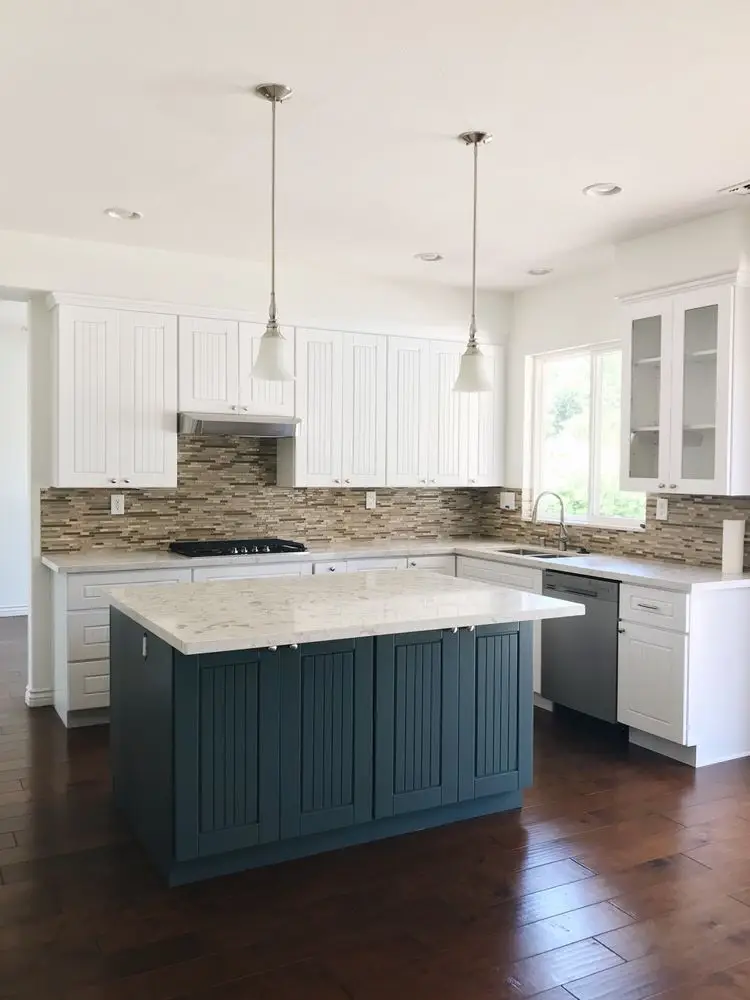
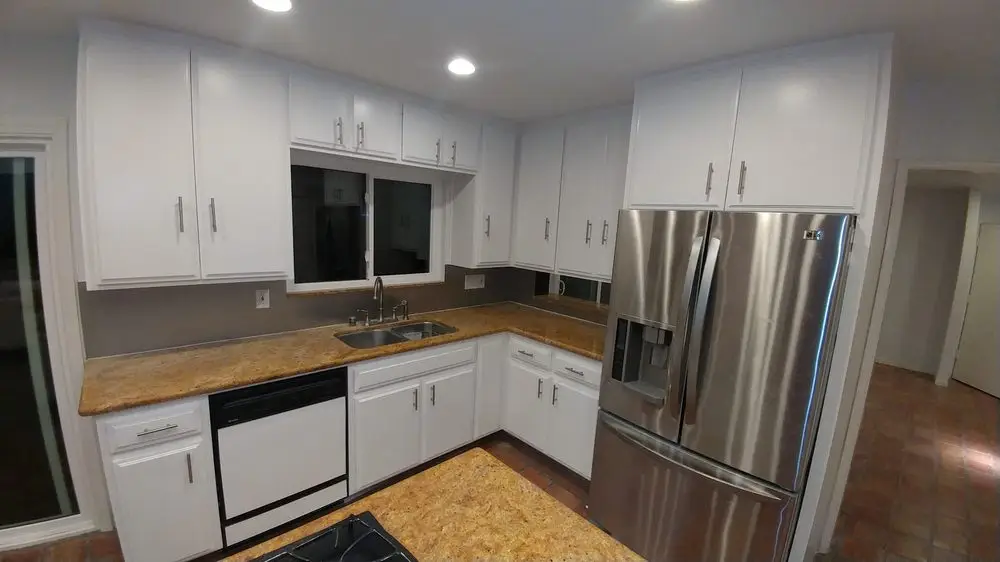
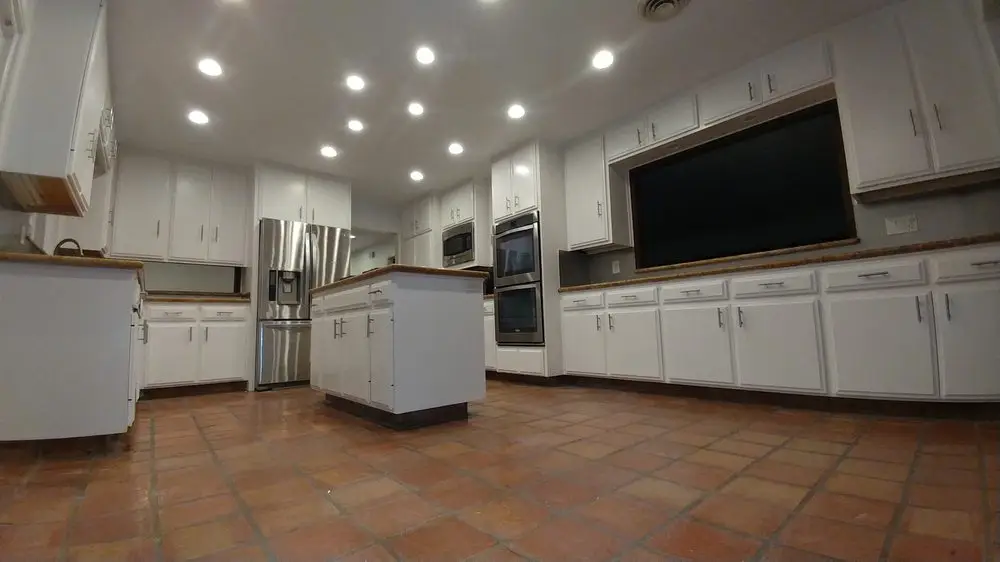
What is 2K polyurethane?
2K polyurethane is a two-component catalyzed coating: a urethane resin plus a hardener (the catalyst) that chemically cross-link as they cure into a hard, durable, cabinet-grade finish. Parallel Painting refinishes cabinets with a 2K polyurethane — a factory-grade, water-based system, the kind of chemistry used on European cabinetry. The water-based system produces less solvent odor than many traditional solvent-borne coatings, and catalyzing the compatible coating system is intended to increase hardness, adhesion, and chemical resistance compared with using that system uncatalyzed.
That "2K" stands for two-component: the resin and the catalyst are mixed in a set ratio, and the catalyst is what raises the hardness, adhesion, and chemical resistance above a single-component paint. It is the cabinet coating system we trust for demanding kitchens.
Parallel Painting sprays the finish with HVLP equipment — two coats of catalyzed 2K primer and two to three 2K polyurethane topcoats, sanded on a 180-to-400 grit progression: 220 after the first primer coat, 320 after the second, 400 before the final topcoats. Spray application is what produces the smooth, refined surface you can't get from brushing or rolling a cabinet door. On open-grain woods like oak, grain filling is an option: a high-build 2K primer is worked into the grain and the flat panels are skim-filled smooth, so the grain doesn't telegraph through the color on the flat panels.
How to compare a 2K polyurethane cabinet bid
To compare cabinet bids on the same basis, don't stop at the word "2K." Ask each contractor for the exact coating product, the exact preparation steps, and how many primer and topcoats they spray. A real two-component catalyzed system, sprayed over proper prep, is a different product than a single-component paint rolled on in an afternoon — and the bid should reflect that.
Parallel Painting uses a 2K polyurethane — a two-component catalyzed, water-based urethane — sprayed by HVLP in two primer coats and two to three topcoats. We're glad to walk you through the exact product and the prep at your estimate, so you know precisely what you're paying for.
The tell of a quality cabinet job is in the prep and the coats — degrease, sand, grain-fill where you choose it, prime, sand again, then spray. Ask any contractor to spell those steps out. It's the fastest way to see who's actually doing the work and who's cutting it short.
How Parallel Painting applies it
Parallel Painting refinishes cabinets with a 2K polyurethane, sprayed in a controlled, contained setup. Doors and drawer fronts come off and are sprayed in the negative-pressure booth at Tyler's shop; the cabinet boxes are sprayed in place inside a sealed, negative-pressure work area, after HEPA-vacuumed sanding, so the spray and dust stay controlled in your kitchen.
Every door, drawer front, and piece of hardware is removed, numbered, and taken to the shop, where doors are hung on racks and sprayed hanging — faces and edges in one continuous pass. Festool sanders run to HEPA-filtered extraction during prep; the finish goes on in two coats of catalyzed 2K primer and two to three topcoats, sanded finer at every stage — 220, then 320, then 400 before the final coats. When everything has cured, Tyler reinstalls and aligns it all and walks the kitchen with you.
Source extraction, sealed containment, and detailed cleanup work together to control dust. The point of the containment and HEPA-vacuumed sanding is to keep a factory-grade spray finish achievable in a lived-in home, not to promise a sterile environment.
Using 2K polyurethane across Southern California
Southern California presents two distinct finishing environments: the hot, dry desert climate of the Coachella Valley and the strong sunlight of the Temecula Valley. Parallel Painting's cabinet-finishing process uses a two-component (2K) polyurethane system. Product selection depends on the substrate, existing condition, exposure, project scope, and current manufacturer instructions.
Coachella Valley — hot, dry desert climate
Palm Desert, Palm Springs, Rancho Mirage, Indian Wells, and La Quinta sit in a hot, dry desert climate, where kitchens on west-facing walls absorb hours of direct afternoon sun. Parallel Painting's cabinet-finishing process uses a two-component (2K) polyurethane system. Product selection depends on the substrate, existing condition, exposure, project scope, and current manufacturer instructions. Surface preparation and primer selection are part of the completed finish.
Temecula Valley — sun and warm summers
Temecula, Murrieta, Menifee, Wildomar, Lake Elsinore, and Fallbrook see strong sunlight and warm summers. South-facing and west-facing windows expose kitchen cabinet surfaces to sun. Many older kitchens have dated oak or painted cabinetry that homeowners are ready to update.
We include a written 5-year warranty on every cabinet job: if the finish chips, peels, or blisters because of faulty prep, Tyler comes back and repairs it.
What the finish requires to apply correctly
Applying the finish correctly calls for professional HVLP spray equipment, a negative-pressure spray booth and a sealed, negative-pressure work area, specialized mixing and application training, and a multi-day process. When comparing contractors, ask for the exact coating product and current technical documents, and ask each contractor for the exact preparation steps.
Three things define the work:
Equipment. The finish is sprayed through professional HVLP equipment in a dust-controlled environment. The equipment investment is part of running a cabinet-finishing operation.
Knowledge. Application follows the product's technical data sheet — mixing ratio, working time, temperature, and application steps. Ask each contractor for the exact preparation steps and the current technical data sheet for the product they use.
Process. Parallel Painting's process uses dust containment and a multi-day sequence of priming, sanding, spraying, and curing. Confirm what is removed, repaired, masked, coated, cured, and reinstalled.
At Parallel Painting, we have built our operation around this process. We use the same 8-step cabinet refinishing process on every project: consultation, in-home assessment and written quote, protection and containment planning, labeled removal, clean/degloss/sand/repair/grain-fill where you choose it, HEPA-vacuumed prep and sealed negative-pressure containment, professional HVLP spray, then cure, reinstall, alignment, final walkthrough, and warranty. The coating is a two-component (2K) polyurethane system. Your existing cabinets get a fresh sprayed finish, without replacing a single box.
Learn More About Our Cabinet Services
- Will Painted Cabinets Peel or Chip? — How prep quality and coating choice affect cabinet durability.
- How Long Does Cabinet Refinishing Take? — Full phase-by-phase timeline.
- Cabinet Painting vs Refinishing vs Refacing — Which option is right for your kitchen.
- Containment & HEPA Setup — Parallel Painting uses HEPA-vacuumed sanding and a sealed, negative-pressure work area vented outside.
- Cabinet Painting Cost in Temecula — 2026 pricing guide and what to expect.
Cabinet Refinishing by City
- Cabinet Refinishing in Temecula
- Cabinet Refinishing in Murrieta
- Cabinet Refinishing in Menifee
- Cabinet Refinishing in Wildomar
- Cabinet Refinishing in Lake Elsinore
- Cabinet Refinishing in Fallbrook
- Cabinet Refinishing in Palm Desert
- Cabinet Refinishing in Palm Springs
- Cabinet Refinishing in Rancho Mirage
- Cabinet Refinishing in Indian Wells
- Cabinet Refinishing in La Quinta
Related Services
Cabinet Refinishing in Temecula
See our 2K polyurethane finish in action on Temecula kitchen cabinets.
Cabinet Refinishing in Palm Desert
Our 2K polyurethane cabinet finish for Coachella Valley kitchens.
Containment & HEPA Setup
Parallel Painting uses HEPA-vacuumed sanding and a sealed, negative-pressure work area vented outside.
Cabinet Refinishing Cost
2026 planning guide with door and drawer-front pricing guidance.
How Long Does Refinishing Take?
Full timeline breakdown from prep to final coat.
Painting vs Refinishing
Compare your options to find the best fit for your kitchen.
Already painted and failing? See how we fix peeling painted cabinets and what a full rescue refinish involves.
Ready for a 2K Cabinet Finish?
Call Tyler for a free in-home estimate.