
Containment & HEPA Setup for Cabinet Refinishing
The kitchen bagged off into a sealed negative-pressure work area, an exhaust fan venting outside, and HEPA-vacuumed sanding at the sander. A fan draws air through a regular filter and vents outdoors to help control airborne dust, overspray, and fumes within the work area.
What mess does cabinet refinishing usually create?
Done without containment, cabinet refinishing generates fine wood dust from sanding and overspray from spraying. HEPA filters are rated to capture 99.97% of airborne particles at 0.3 microns. Parallel Painting uses HEPA-vacuumed sanding and a sealed, negative-pressure work area vented outside. A fan draws air through a regular filter and vents outdoors to help control airborne dust, overspray, and fumes within the work area.
When you compare bids, ask each contractor exactly how they contain dust and overspray, what they mask and protect, and what equipment they use.
Dust control is also part of the finishing process: particles that land in wet finish can create texture in the surface.
How does Parallel Painting's containment system work?
At Parallel Painting, containment is planned for each project from the start. Here is the process:
Floor-to-Ceiling Containment Walls
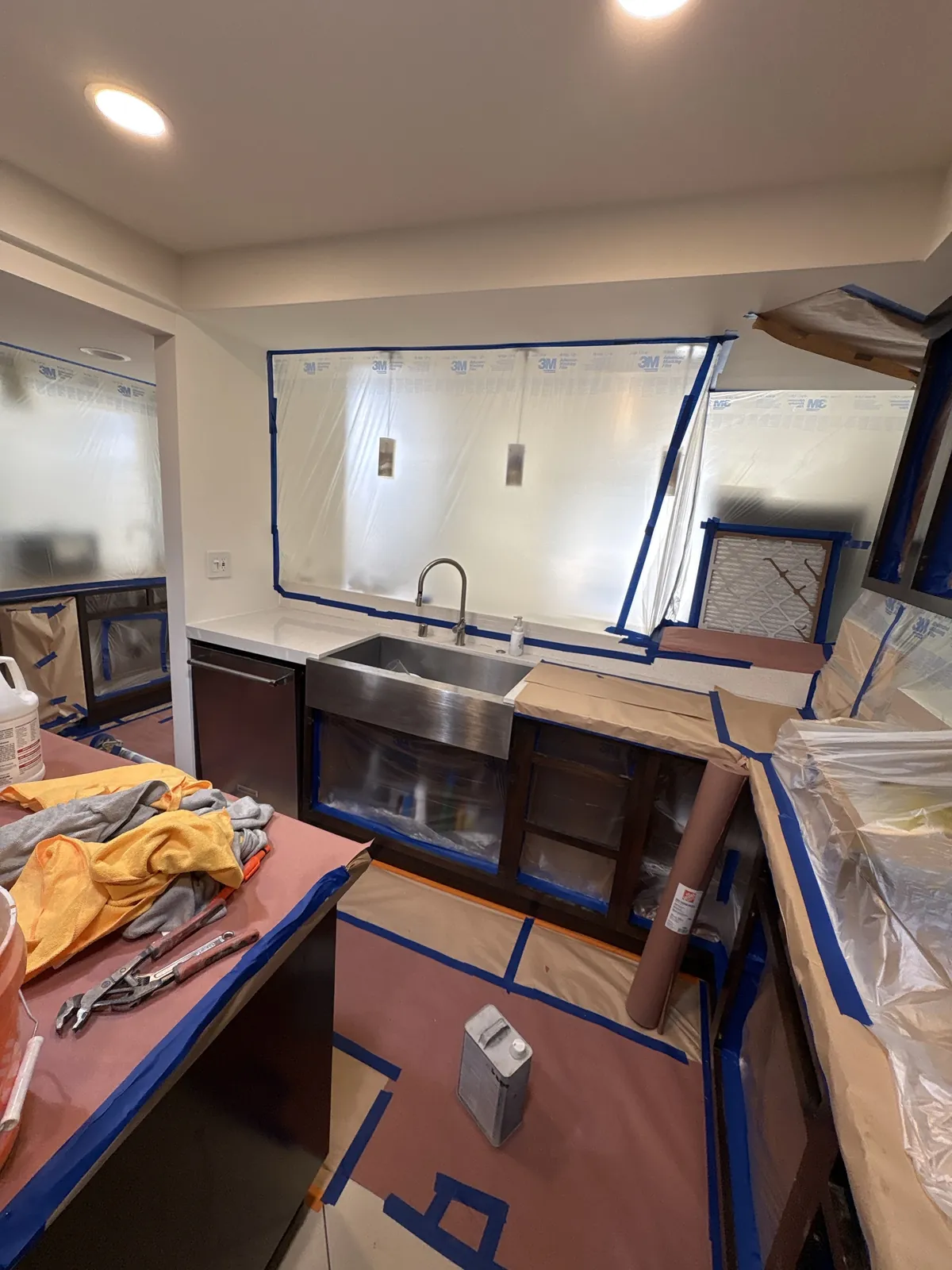
Before any sanding or spraying begins, Parallel Painting builds floor-to-ceiling plastic barrier walls around the entire work area. These are not loose sheets of plastic taped to the ceiling — they are tensioned barriers with sealed edges along the floor, ceiling, and adjacent walls. Every seam is taped. Every gap is sealed. The work area becomes a fully enclosed room within your kitchen.
Negative-Pressure Containment
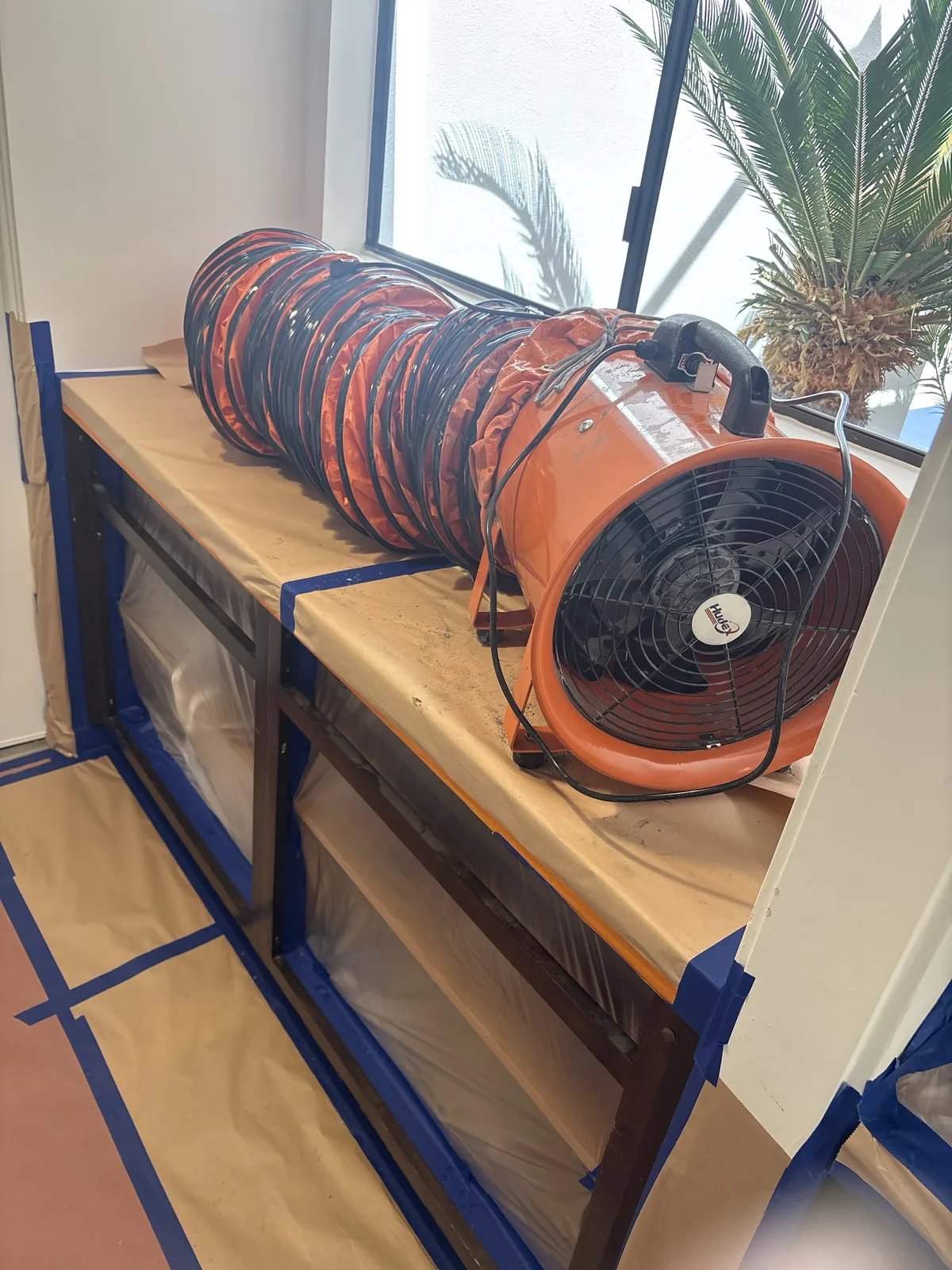
A fan draws air through a regular filter and vents outdoors to help control airborne dust, overspray, and fumes within the work area. This creates negative pressure inside the work area.
Sanding Vacuums and the Exhaust Fan
Sanding runs through HEPA-filter vacuums connected at the sander; HEPA filters are rated to capture 99.97% of airborne particles at 0.3 microns. The work area is vented outside by a ducted exhaust fan with a regular filter.
Controlled Spray Environment
Once containment is established, Parallel Painting sprays cabinet frames on-site using professional HVLP equipment within the sealed environment. Doors and drawer fronts are removed and sprayed off-site in the negative-pressure booth at Tyler's shop. Cabinet frames are sprayed on-site inside a sealed, negative-pressure work area; doors and drawer fronts are sprayed off-site in the shop booth.
What is a HEPA filter rated for?
HEPA filters are rated to capture 99.97% of airborne particles at 0.3 microns. Tyler uses HEPA filtration on the sanding vacuums; the exhaust fan that vents the work area uses a regular filter.
What does the process look like in action?
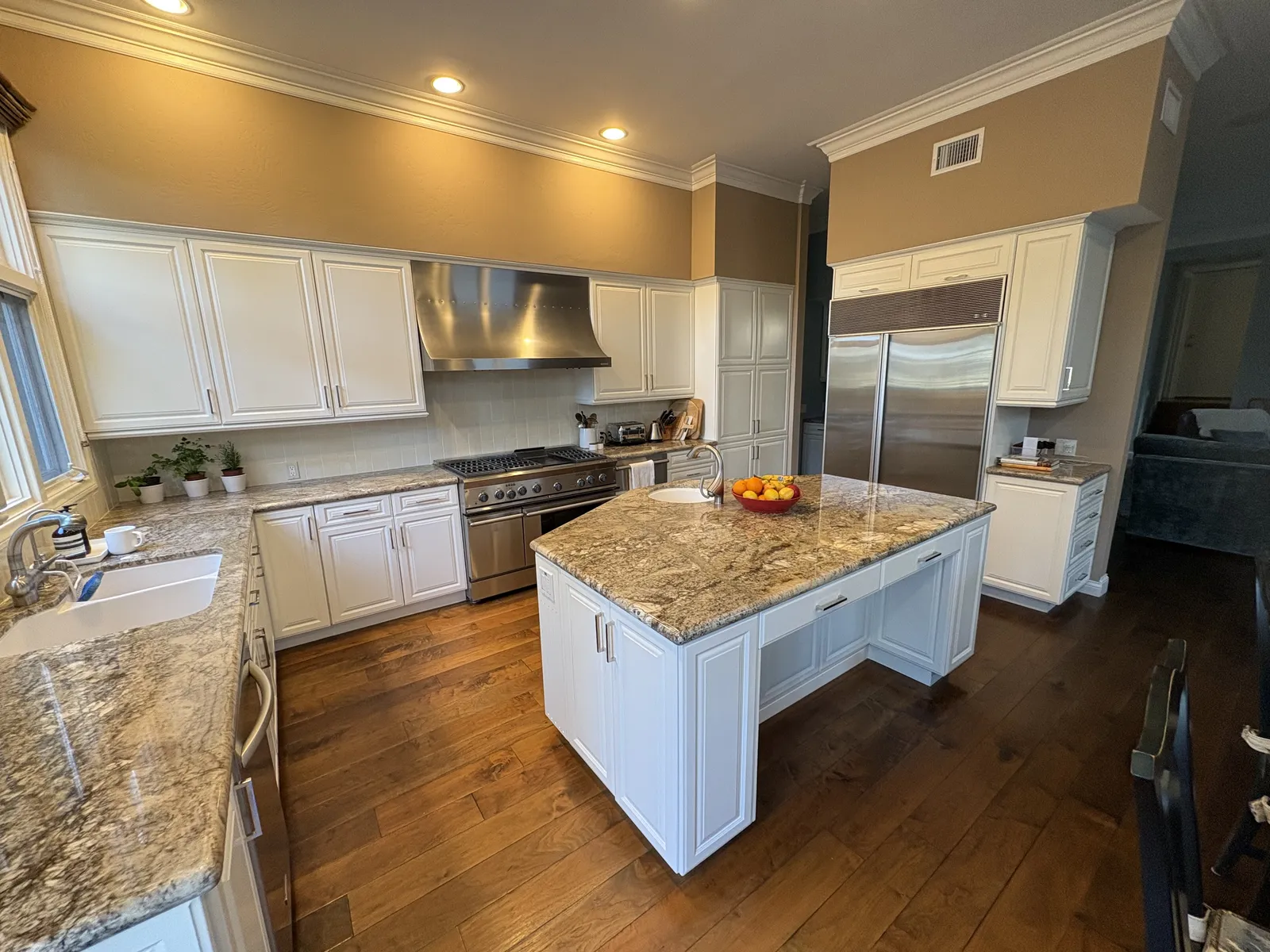
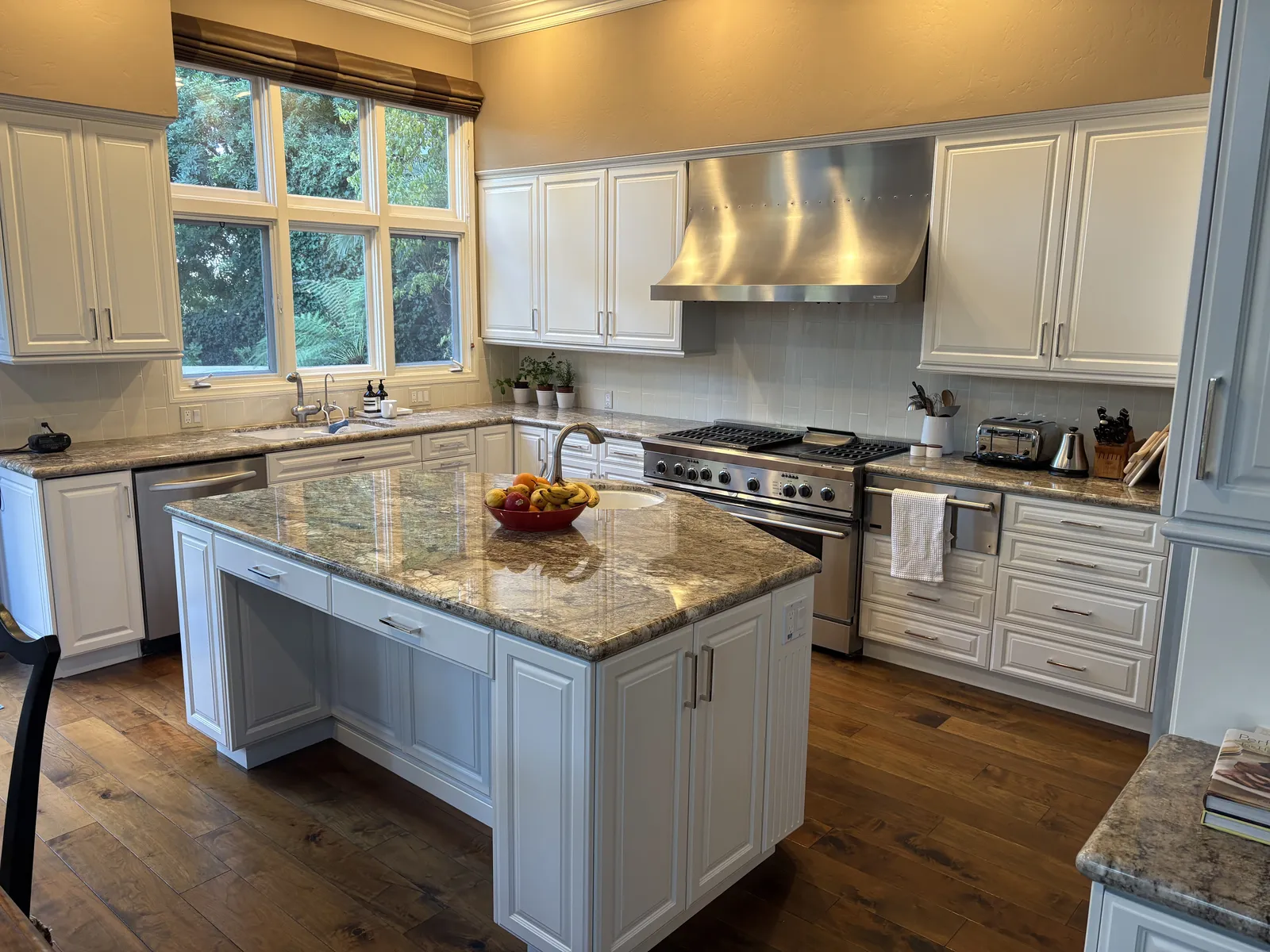
Full containment in a residential kitchen — plastic walls, sealed edges, the exhaust fan venting outside.
Inside the sealed, negative-pressure work area on a real job
How Are Cabinet Boxes Sprayed Inside the Home?
Beyond dust control, spray application is central to how Parallel Painting finishes cabinets. Parallel Painting uses spray application for its cabinet-finishing process; other manufacturer-approved cabinet coatings may permit brush, roller, or spray application. On large flat cabinet doors, the finishing method affects how the surface reads under kitchen lighting.
Professional HVLP spray application atomizes the coating into a fine mist that lays down in even, thin coats, producing a smooth sprayed finish. Parallel Painting uses spray application for its cabinet-finishing process; other manufacturer-approved cabinet coatings may permit brush, roller, or spray application.
Parallel Painting's HVLP setup is run inside the sealed plastic enclosure.
Why surface preparation matters for adhesion
When you compare refinishing options, ask each contractor exactly what surface preparation they do — how they clean, sand, and prepare the existing finish before a new coating goes on. Surface preparation is one of the factors that affects how well a finish adheres.
Parallel Painting's process uses mechanical sanding to create a clean, profiled surface for the new coating to bond to. Spray application generates overspray regardless of the preparation method, which is why Parallel Painting pairs sanding with HEPA-vacuumed dust extraction and sealed, negative-pressure containment.
Properly sanded surfaces give the new coating a clean, profiled surface to bond to.
Cabinet Refinishing in Your Area
Related Services
Cabinet Refinishing in Temecula
See Parallel Painting's contained refinishing process in Temecula.
Cabinet Refinishing in Murrieta
Professional cabinet refinishing with full containment in Murrieta homes.
2K Polyurethane Finish
The two-component (2K) polyurethane system used on cabinets.
Will Painted Cabinets Peel?
What coating choice and prep quality mean for how a finish holds up.
How Long Does Refinishing Take?
Full timeline from containment setup to final coat.
Want to See Parallel Painting's Containment Setup?
Call Tyler for a free in-home estimate. Parallel Painting will walk you through exactly how the containment process works.