


Sprayed 2K
Wildomar Cabinet Refinishing with 2K Polyurethane
A smooth sprayed finish. A kitchen you're proud to show off.
- Yelp: 56 reviews, 4.8-star rating
- Google: 10 reviews, 5.0-star rating
5-Year Written Warranty
The written 5-year warranty covers chipping, peeling or blistering caused by faulty preparation. The coating itself is covered by its manufacturer.
- CSLB #1015608
See and feel finish samples in your own kitchen.
Planning range: $135–$185 per door, $95–$145 per drawer front.
The Finished Result
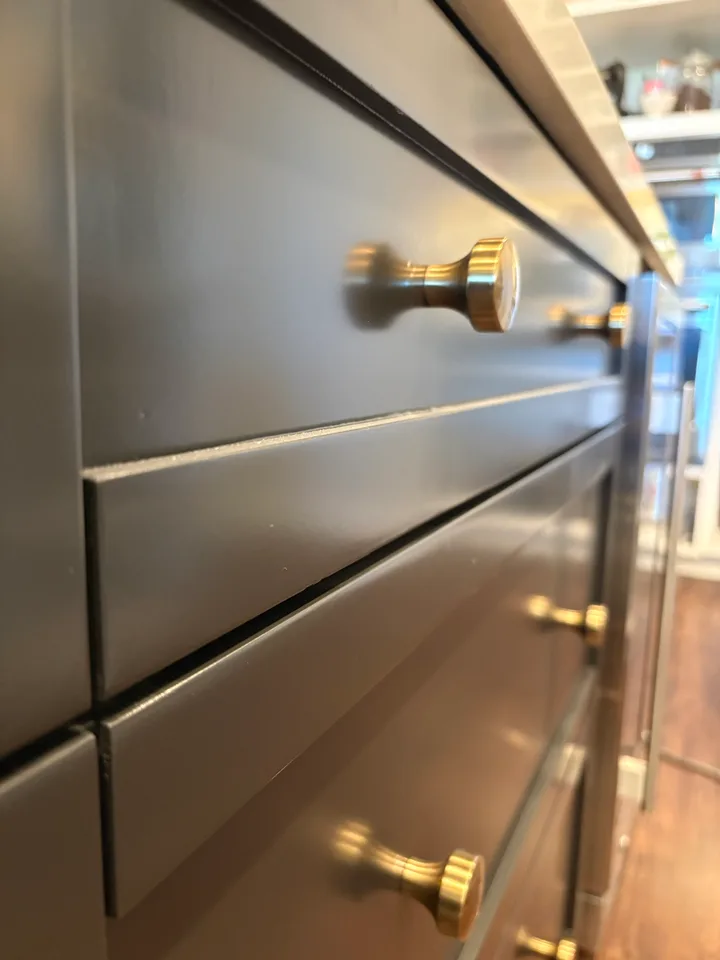
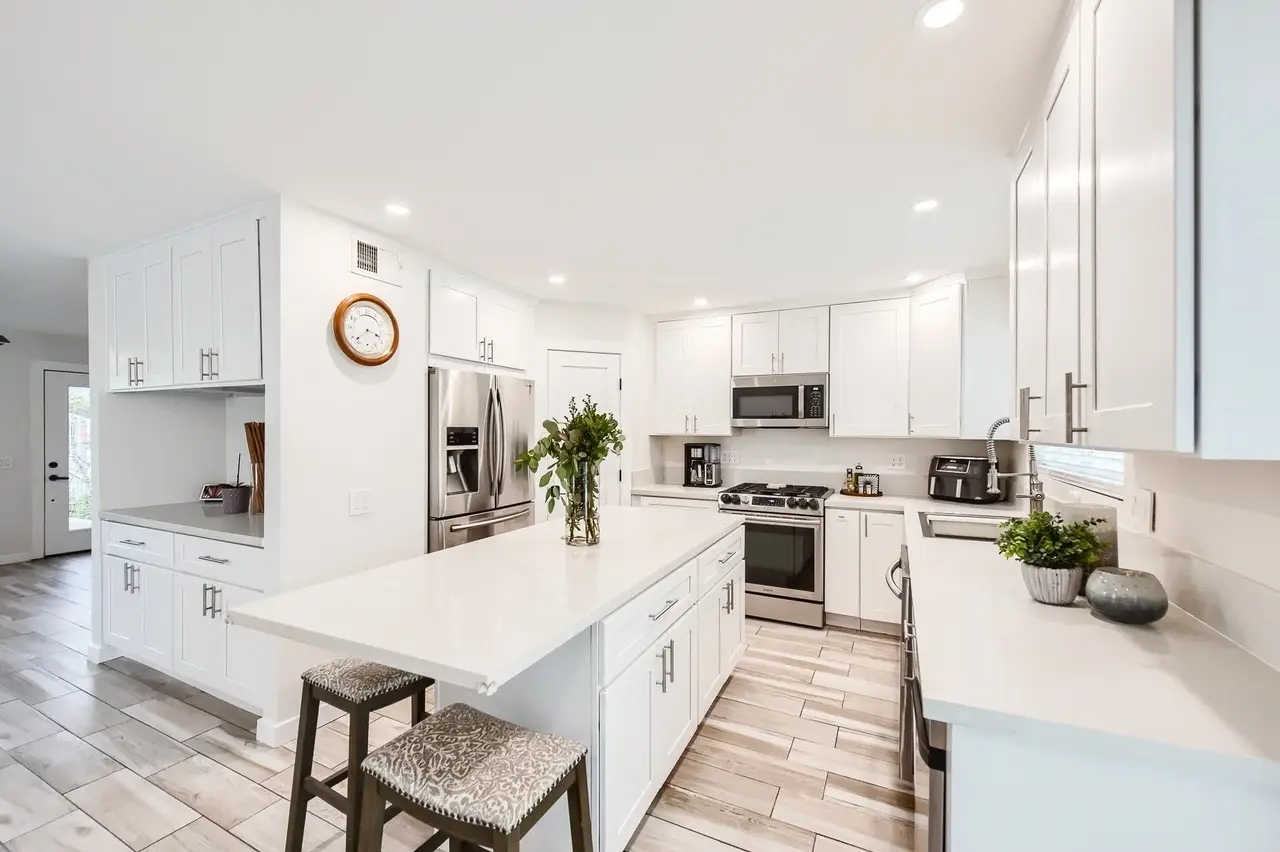
A smooth, sprayed 2K finish on a kitchen island, refinished in place.
Watch the reflection · 0:04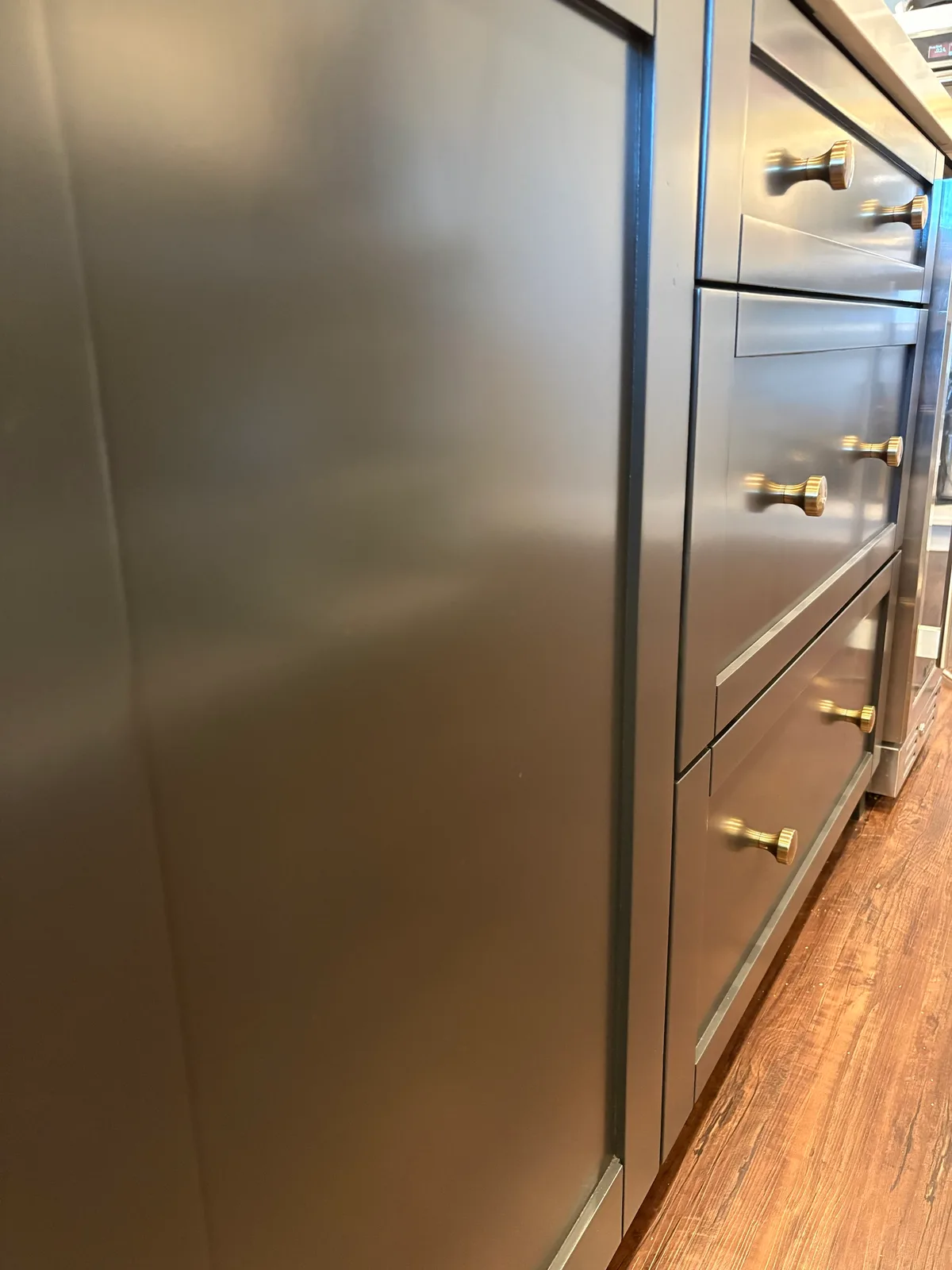
Tyler refinishes cabinets in Wildomar’s older ranch kitchens and newer tract homes, preserving sound cabinet boxes.
What goes into that finish
The work behind the finish.
The time is in the preparation, surface corrections, sanding and sprayed coating system. These are photos from Tyler’s process.
The Cabinet Refinishing Process
Four production phases, from door removal through the final walkthrough. Tyler Fowler handles each project personally.

Protect & clean
Remove and label the doors. Mask the kitchen, degrease and prepare the surfaces.
Cabinet box exteriors are sprayed in place, inside a sealed, negative-pressure work area that is set up in the kitchen before sanding begins and stays in place through spraying.
A fan draws air through a regular filter and vents outdoors to help control airborne dust, overspray, and fumes within the work area.
Protect and prepare
The doors and drawer fronts are prepped at Tyler's shop. The cabinet boxes get the same prep in your kitchen, where you can see it done.
Prime & correct
The longest step. Two primer coats. Between them, every surface is skim-coated with glazing putty, dents and seams are spot-puttied, and it is all sanded smooth. Every surface is checked under bright inspection lights before the topcoat. Optional grain filling.
Sand smooth
Sand the corrections, primer and between topcoats. Each coat needs drying time.
Sanding is HEPA-vacuumed, and the cabinet exteriors are finished in 2K polyurethane.

Spray & reinstall
Spray two to three 2K topcoats. Reinstall and align the doors once ready.
Doors and drawer fronts are sprayed in the negative-pressure booth at the shop.
Cabinet boxes are sprayed in place inside the sealed work area.
Build the finish
The topcoats go on the same way as the primer: doors in the shop's spray booth, boxes in your kitchen's sealed, negative-pressure work area. Each coat gets the required drying time before the next step.
Back together
Required drying time, reinstallation, alignment, and the final walkthrough.
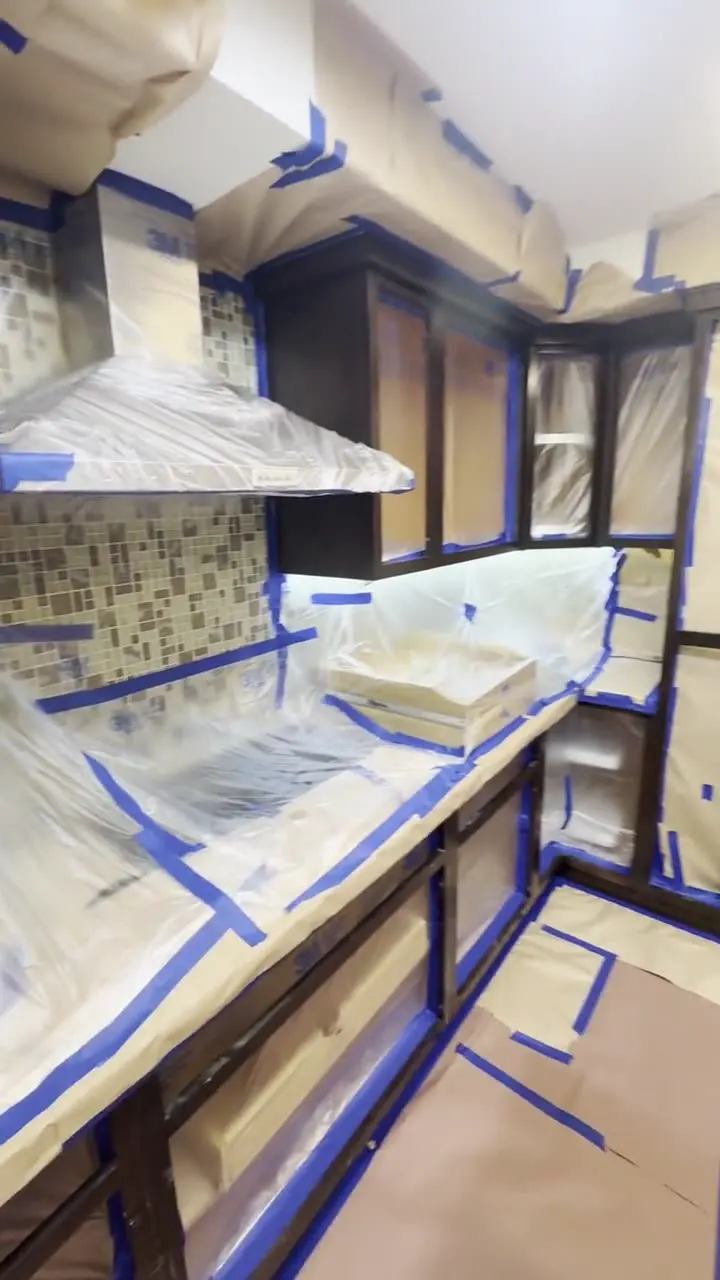
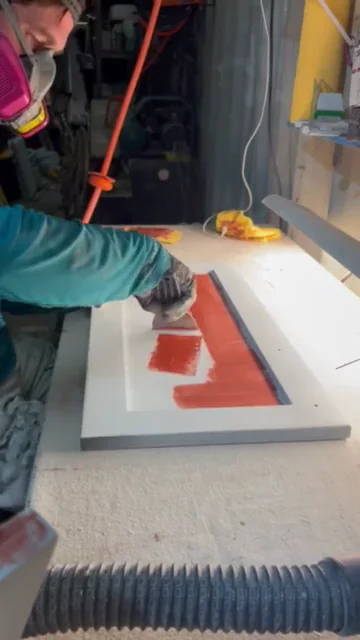
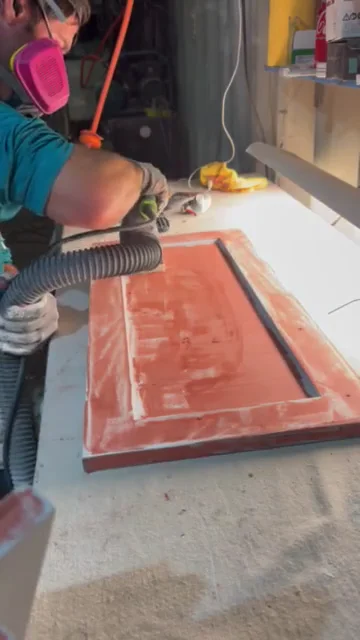
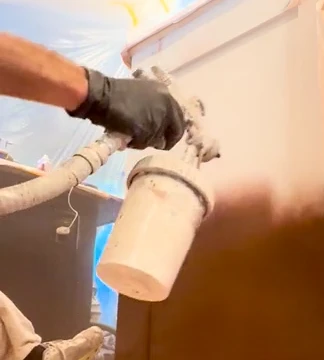
2K polyurethane costs more than one-part cabinet paint. Your quote also covers the preparation, shop finishing and drying time shown here.
Larger kitchens and grain filling take longer; your written quote gives the dates.
Quote and written warranty review →
More process close-ups
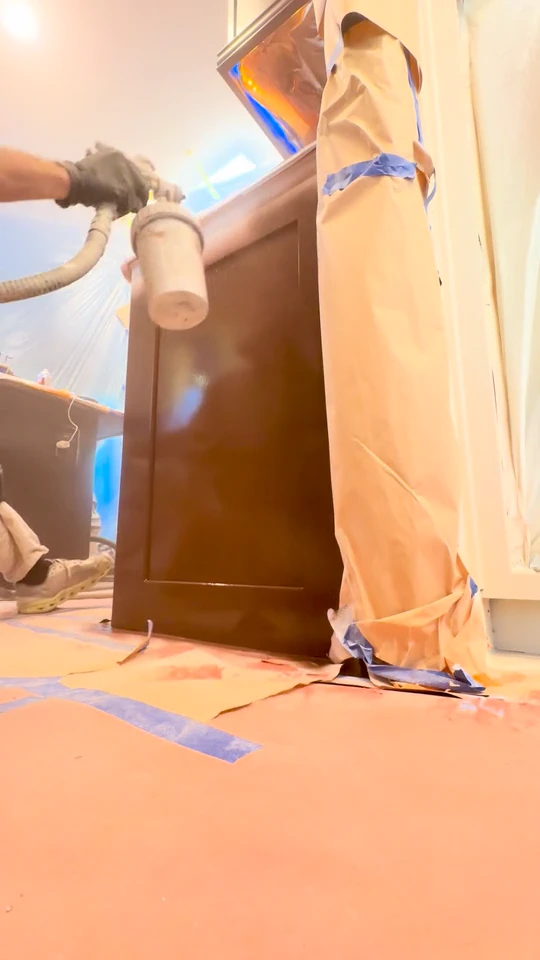
Finish proof
The finish, up close
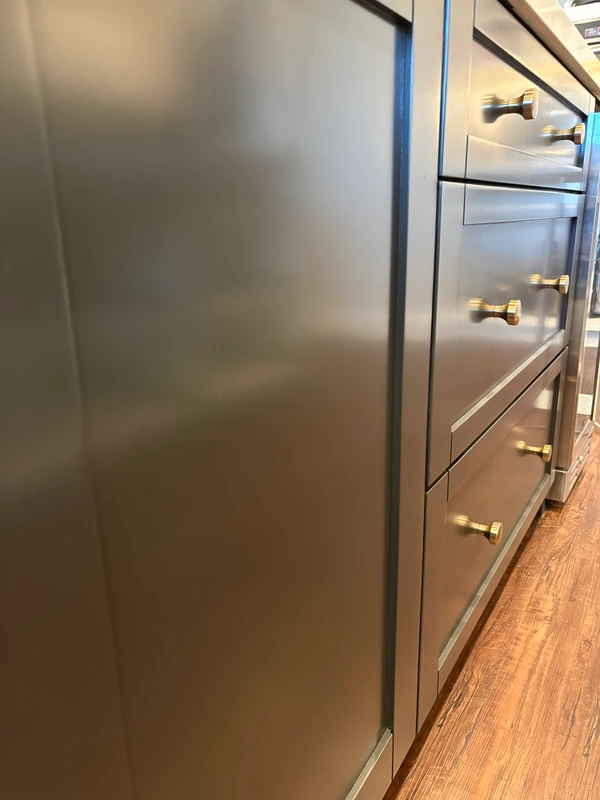
Real Results
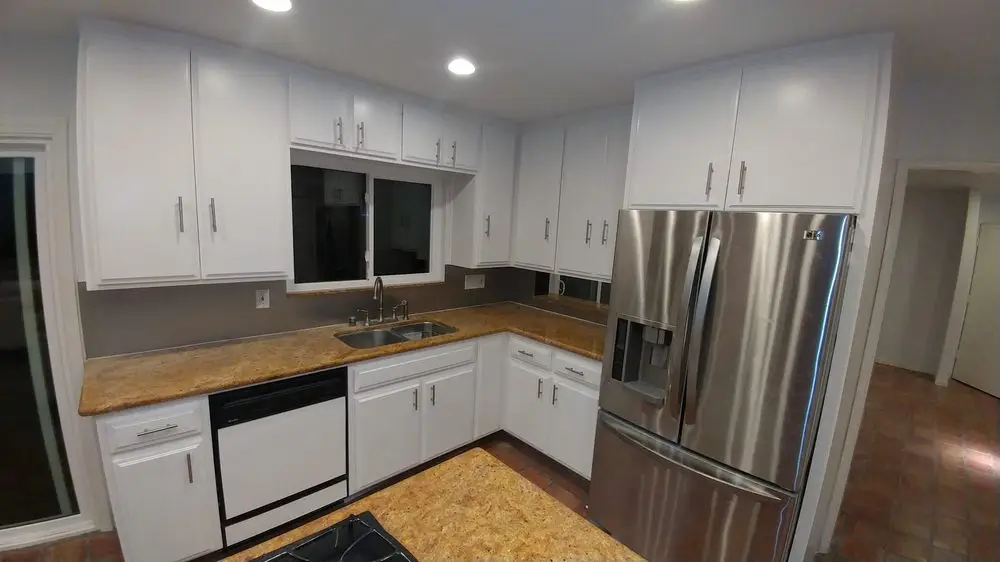
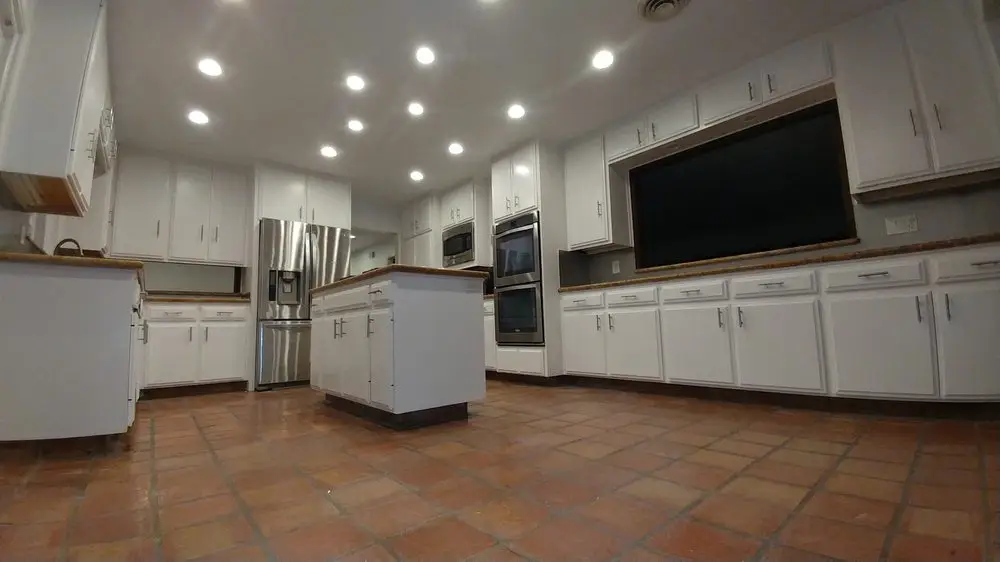
Real kitchens. Same cabinets, finished in sprayed 2K polyurethane.
Beautiful cabinets, done right. 2K polyurethane and sealed containment, with Tyler Fowler handling each project personally — real value, real results, and a 5-year written warranty. Serving Wildomar and the Temecula Valley.
Tyler brings a sample to your home and gives a fixed written quote after looking over the cabinets in person.
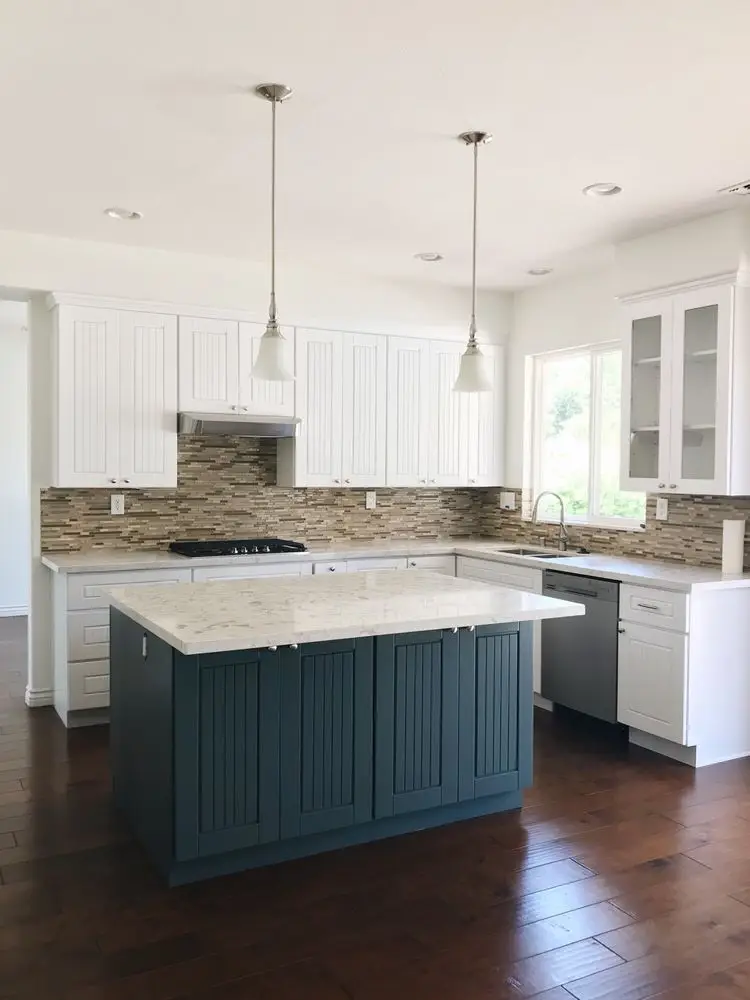
Finished island · Temecula · sprayed 2K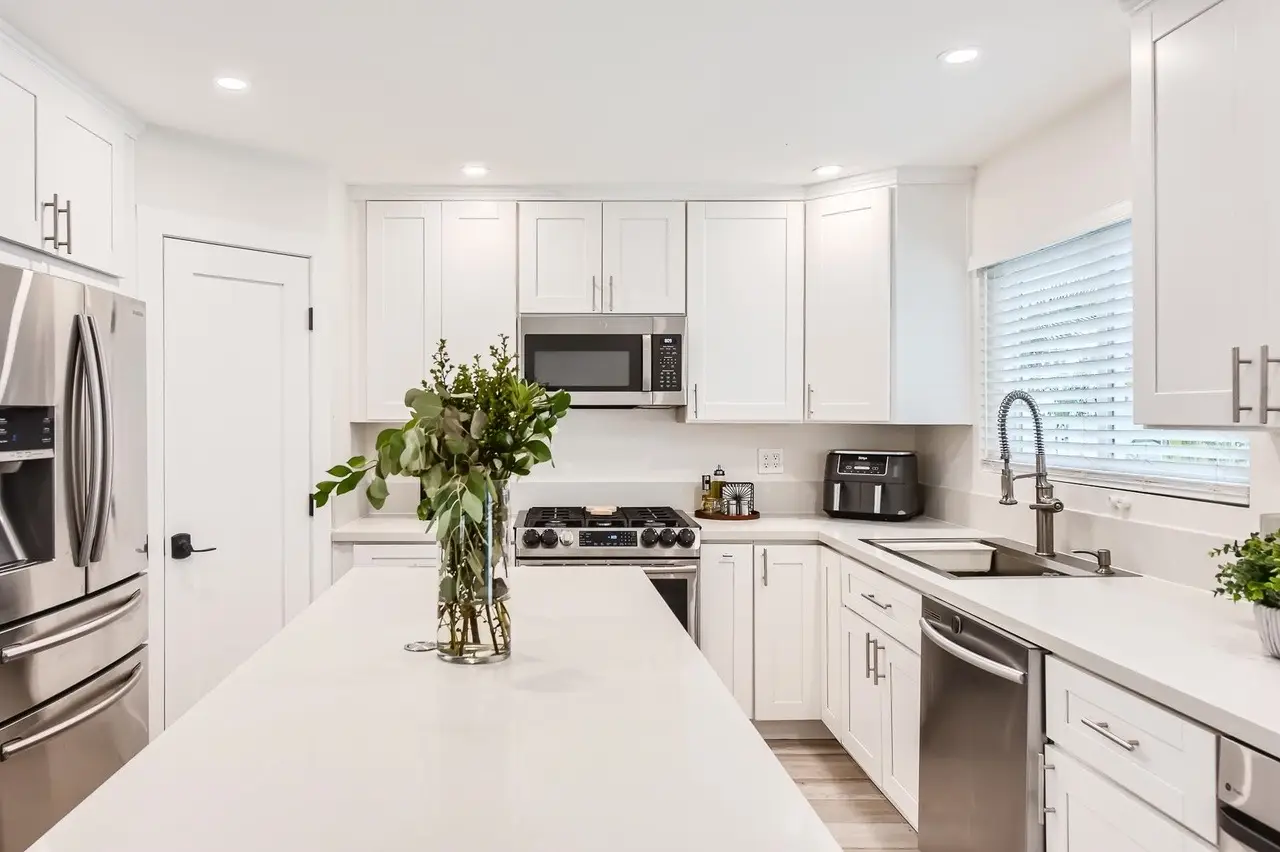
Cabinet refinishing in Wildomar
Keep your kitchen.
Change the finish.
Sound cabinets and a layout you like? Refinish the cabinets you already own in sprayed 2K polyurethane.
- A sprayed cabinet finishTwo-component 2K polyurethane, with preparation and sanding between coats.
- Tyler handles your projectFrom the in-home estimate through reinstall and the final walkthrough.
- A written prep warrantyFive years for chipping, peeling or blistering caused by faulty preparation.
Cabinet refinishing pricing in Wildomar
Southern California planning guidance — not a price list.
Standard single-color exterior cabinet refinishing commonly runs about $135–$185 per cabinet door and $95–$145 per drawer front before project-specific adjustments.
Each rate is per one physical cabinet door or drawer front — not per cabinet box.
These planning ranges include the standard exterior work on your cabinets: door fronts and backs, drawer fronts, face frames, box exteriors, toe kicks, and side panels. They also include removal and reinstall, preparation, 2K polyurethane, HEPA-vacuumed sanding, sealed negative-pressure containment, and the 5-year written warranty. Tyler Fowler handles each project personally. Oak grain remains visible unless you choose grain filling.
What moves the price
Three things set the price:
| Option | What it covers | Planning range |
|---|---|---|
| Cabinet door | Front and back painted; cabinet boxes, face frames, toe kicks, and side panels included | $135–$185 per cabinet door |
| Drawer front | Painted; same inclusions as the door | $95–$145 per drawer front |
| Grain filling (optional) | Light for shallow grain or heavy for deep grain such as red oak; door fronts only, or fronts and backs | adds $30–$85 per cabinet door; $10–$20 per drawer front |
| Painted interiors (optional) | The inside of the cabinet boxes, cleaned and sprayed; an average, since it depends on how many boxes there are and their condition | adds $35–$60 per cabinet door; $25–$45 per drawer front |
Small kitchens cost more per door, because the same sealed, negative-pressure work area still has to be built around them; failing old finishes, heavy damage, extra colors, repairs and specialty finishes also add to the price. A fan draws air through a regular filter and vents outdoors to help control airborne dust, overspray, and fumes within the work area.
Grain filling on frames and panels is quoted separately. Filling follows an approved cured sample. Heavy oak comes out smooth to the touch with the pores filled, but it is still real wood: under bright side light you will see gentle waves from the grain, not the dead-flat look of MDF.
Painted interiors are counted per cabinet box; corner, lazy-susan, sink, and extra-wide boxes take more.
A sound factory interior can be cleaned and sprayed. Damaged, peeling, or heavily greasy interiors need extra preparation and bonding primer.
Interiors are not grain-filled unless you request that separate work and approve a cured sample.
If you want a completely flat, MDF-style door on heavy oak, new doors are supplied and installed by a licensed cabinet partner. Parallel Painting finishes the new doors in the same 2K and refinishes the existing boxes to match; its painting license does not cover supplying or installing doors.
Tyler provides a fixed written quote after counting your doors and drawer fronts and looking over the cabinets in person.
For a full kitchen, the door and drawer-front count is the starting point.
See the complete cabinet-refinishing pricing guide · Read cabinet pricing and grain-fill FAQs
Pricing guidance last verified October 24, 2026.
Or call (951) 551-0583
Tyler or Melissa will reply to set up a visit. Tyler brings a sample to your home and gives a fixed written quote after looking over the cabinets in person.

Meet Tyler
Tyler Fowler serves Wildomar across its neighborhoods from his Anza base. Cabinet conditions and project scope vary from home to home; he handles each project personally, from the estimate through the final walkthrough.
- One jobat a time, Tyler on site
- 5 yearswritten warranty on prep
- Samplesin your own kitchen
- 2016CSLB #1015608 since
Why Homeowners Choose Parallel Painting
Sprayed 2K polyurethane, a sealed negative-pressure work area, careful preparation and a written 5-year warranty.
Sealed Containment
Tyler sets up a sealed, negative-pressure work area in the kitchen for in-place cabinet work, using plastic walls and sealed edges. A fan draws air through a regular filter and vents outdoors to help control airborne dust, overspray, and fumes within the work area. Source extraction, containment, and detailed cleanup work together to control dust.
HEPA-Vacuumed Sanding
Professional Festool sanders connected to HEPA-filtered dust extraction. Combined with sealed containment and detailed cleanup, this helps control airborne and settled sanding dust throughout the job.
2K Polyurethane
A factory-grade, two-component catalyzed polyurethane — the coating chemistry used on European cabinetry — sprayed with HVLP in two to three topcoats. Prime & correct. The longest step. Two primer coats. Between them, every surface is skim-coated with glazing putty, dents and seams are spot-puttied, and it is all sanded smooth. Every surface is checked under bright inspection lights before the topcoat. Optional grain filling. The system is suited to demanding kitchens.
Owner-Operated
Tyler Fowler handles each project personally, from the estimate through the final walkthrough. CSLB #1015608 since 2016.
The Coating System
Sprayed 2K Polyurethane, Built Over Real Prep
Every door and drawer front comes off, gets cleaned and sanded, and is sprayed in the negative-pressure booth at Tyler's shop. The cabinet boxes get the same 2K polyurethane right in your kitchen, sprayed inside a sealed, negative-pressure work area that Tyler sets up before sanding begins and keeps in place through spraying. Sanding is HEPA-vacuumed. Priming and surface correction is the longest step of the job. After the first primer coat, every door, drawer front and cabinet surface is skim-glazed with glazing putty, dents, gouges and open seams are spot-puttied, and everything is sanded back smooth. Doors and drawer fronts are checked on inspection tables under bright shop lights, and the cabinet boxes are checked in the kitchen with LED inspection light bars, so dents, sanding marks and uneven spots are found and fixed in primer, before the 2K topcoat goes on. The second primer coat goes on over that corrected surface, so the 2K topcoat lays down on a flat, uniform base. Open-grain oak can also be grain-filled for a glass-smooth door. 2K is a two-component catalyzed finish: it chemically cures into a hard, tough shell instead of just drying like paint.
- Factory-grade two-component (2K) polyurethane, sprayed
- Doors and drawer fronts sprayed in a negative-pressure booth at the shop
- Cabinet boxes sprayed in place inside a sealed, negative-pressure work area
- HEPA-vacuumed sanding, multiple finish coats on every kitchen. Prime & correct. The longest step. Two primer coats. Between them, every surface is skim-coated with glazing putty, dents and seams are spot-puttied, and it is all sanded smooth. Every surface is checked under bright inspection lights before the topcoat. Optional grain filling.
Reviews
Client Reviews
Read reviews on Google and Yelp
“Tyler's work was meticulous. The cabinets look new. The wear, tear, and damage is gone. I could never have done this quality of work myself.”
“Tyler’s workmanship is exceptional! He’s meticulous when it comes to his work. He refinished our kitchen cabinets and they look amazing! I highly recommend Parallel Painting!”
“He turned our beech colored wood shaker cabinets into white cabinets and painted our island blue for a nice pop of color. You can tell Tyler takes pride in his work and is very meticulous to every single detail.”
“He also painted my kitchen cabinets and my bedroom doors and trim as well as the front door. So basically everything in my tiny 600 ft condo. It came out gorgeous. He's on time and a meticulous worker.”
Cabinet refinishing in Wildomar: local details
Why do Wildomar homeowners choose Parallel Painting for cabinet refinishing?
Wildomar homeowners choose Parallel Painting for cabinet refinishing suited to older ranch kitchens and newer tract homes. Each project includes HEPA-vacuumed sanding, sealed negative-pressure containment, and a sprayed 2K polyurethane finish. Tyler Fowler handles each project personally from estimate through final walkthrough. CSLB #1015608, licensed since 2016; each project includes a written 5-year warranty. A fan draws air through a regular filter and vents outdoors to help control airborne dust, overspray, and fumes within the work area.
Wildomar is a small-town community with a mix of planned subdivisions and larger ranch-style properties spread across the rolling hills. Parallel Painting refinishes kitchens whose original cabinets have reached the age where they need attention.
Parallel Painting refinishes kitchens with raised-panel oak or maple doors in a honey or golden stain, standard overlay hinges, and brass or brushed-nickel hardware. These cabinets are functional and durable, but the styling can feel dated. When the cabinet boxes are solid and well-constructed, they make good candidates for refinishing rather than full replacement.
Parallel Painting also refinishes custom and semi-custom cabinetry — darker stains, a range of wood species, more complex door profiles. These kitchens present a different refinishing challenge. A color change on espresso-stained maple and a refresh of a worn natural finish both use 2K polyurethane.
Tyler is based in Anza, has been CSLB-licensed since 2016, and serves Wildomar. He personally handles every project from first visit to final door hung.
Wildomar's residential communities include The Farm. The drive from Anza to Wildomar is about 45 miles.
What happens during cabinet refinishing in Wildomar?
Plan on about a week of work in your kitchen and about a week for the doors and drawer fronts in the shop. Larger kitchens and grain filling take longer; your written quote gives the dates. Tyler removes every door, drawer, and piece of hardware, then encloses the kitchen in sealed, negative-pressure containment and uses HEPA-vacuumed sanding. Doors and drawer fronts are sprayed in the negative-pressure booth at Tyler's shop; the cabinet boxes are then sprayed in place inside the sealed, negative-pressure work area. Tyler then reinstalls and aligns every piece.
Every Wildomar project starts with Tyler visiting your home to inspect the cabinets. He opens every door, pulls every drawer, identifies the wood species and existing finish type, and notes any damage, wear, or conditions that will affect the refinishing process. You get an honest assessment and a detailed written quote for your specific kitchen.
Builder-grade oak cabinets require a thorough preparation process. The open grain of red oak creates a textured surface that shows through standard paint, leaving a bumpy, uneven result. Priming and surface correction is the longest step of the job. After the first primer coat, every door, drawer front and cabinet surface is skim-glazed with glazing putty, dents, gouges and open seams are spot-puttied, and everything is sanded back smooth. Doors and drawer fronts are checked on inspection tables under bright shop lights, and the cabinet boxes are checked in the kitchen with LED inspection light bars, so dents, sanding marks and uneven spots are found and fixed in primer, before the 2K topcoat goes on. The second primer coat goes on over that corrected surface, so the 2K topcoat lays down on a flat, uniform base. Open-grain oak can also be grain-filled for a glass-smooth door. The gentle waves in the wood still show in the light, and small profiles can keep a little grain texture; he'll show you where before work starts.
For maple and custom cabinets, the grain filling step is less critical, but surface preparation is equally important. Existing stain or finish is deglossed and sanded to create a bond for the primer. Priming and surface correction is the longest step of the job. After the first primer coat, every door, drawer front and cabinet surface is skim-glazed with glazing putty, dents, gouges and open seams are spot-puttied, and everything is sanded back smooth. Doors and drawer fronts are checked on inspection tables under bright shop lights, and the cabinet boxes are checked in the kitchen with LED inspection light bars, so dents, sanding marks and uneven spots are found and fixed in primer, before the 2K topcoat goes on. The second primer coat goes on over that corrected surface, so the 2K topcoat lays down on a flat, uniform base. Open-grain oak can also be grain-filled for a glass-smooth door. Two to three topcoats are sprayed via HVLP, sanded with 320 or 400 after the first topcoat, and 400 to 600 only before a third topcoat when needed. The finish is 2K polyurethane — a two-component catalyzed cabinet-grade system.
Plan on about a week of work in your kitchen and about a week for the doors and drawer fronts in the shop. Larger kitchens and grain filling take longer; your written quote gives the dates. Source extraction, containment, and detailed cleanup work together to control dust. Tyler Fowler handles each project personally, from the estimate through the final walkthrough.
How does 2K polyurethane differ from standard cabinet paint?
Standard cabinet paint is a single-component coating that air-dries. 2K polyurethane is a two-component catalyzed system — the resin and a hardener cross-link as they cure into a hard, smooth cabinet-grade finish. Tyler sprays 2K polyurethane with HVLP in two to three topcoats. Priming and surface correction is the longest step of the job. After the first primer coat, every door, drawer front and cabinet surface is skim-glazed with glazing putty, dents, gouges and open seams are spot-puttied, and everything is sanded back smooth. Doors and drawer fronts are checked on inspection tables under bright shop lights, and the cabinet boxes are checked in the kitchen with LED inspection light bars, so dents, sanding marks and uneven spots are found and fixed in primer, before the 2K topcoat goes on. The second primer coat goes on over that corrected surface, so the 2K topcoat lays down on a flat, uniform base. Open-grain oak can also be grain-filled for a glass-smooth door. Sanding uses 320 or 400 after the first topcoat, and 400 to 600 only before a third topcoat when needed. This system is selected for demanding residential kitchens.
Wildomar's Southwest Riverside County climate brings hot, dry summers, intense afternoon sun, and low humidity. Each surface is prepared carefully so the coating bonds well and holds up to daily use.
Every Wildomar project is backed by a written 5-year warranty, signed by Tyler.
Cabinet Refinishing FAQ — Wildomar
How much does cabinet refinishing cost in Wildomar?
Standard single-color exterior cabinet refinishing commonly runs about $135–$185 per cabinet door and $95–$145 per drawer front before project-specific adjustments. This is Southern California planning guidance — not a price list. Each rate is per one physical cabinet door or drawer front — not per cabinet box. These planning ranges include the standard exterior work on your cabinets: door fronts and backs, drawer fronts, face frames, box exteriors, toe kicks, and side panels. They also include removal and reinstall, preparation, 2K polyurethane, HEPA-vacuumed sanding, sealed negative-pressure containment, and the 5-year written warranty. Tyler Fowler handles each project personally. Oak grain remains visible unless you choose grain filling. Three things set the price: Doors and drawer fronts: the per-piece range above, with the cabinet boxes, face frames, toe kicks, and side panels included. Grain filling: adds about $30–$85 per cabinet door and $10–$20 per drawer front, depending on how deep the grain is and whether the backs of the doors are filled too. Painted interiors: add about $35–$60 per cabinet door and $25–$45 per drawer front on average, depending on how many cabinets there are and the condition of the insides. Some interiors are prefinished and fine as they are. Small kitchens cost more per door, because the same sealed, negative-pressure work area still has to be built around them; failing old finishes, heavy damage, extra colors, repairs and specialty finishes also add to the price. A fan draws air through a regular filter and vents outdoors to help control airborne dust, overspray, and fumes within the work area. Tyler provides a fixed written quote after counting your doors and drawer fronts and looking over the cabinets in person. For a full kitchen, the door and drawer-front count is the starting point.
How long does cabinet refinishing take in Wildomar?
Plan on about a week of work in your kitchen and about a week for the doors and drawer fronts in the shop. Larger kitchens and grain filling take longer; your written quote gives the dates. Tyler removes each door, drawer front, and piece of hardware, labels every piece for exact reinstallation, then encloses the kitchen in sealed negative-pressure containment with plastic walls and sealed edges. Doors and drawer fronts are prepped, grain-filled on oak when you choose it, and sprayed in the negative-pressure booth at Tyler's shop. The sealed, negative-pressure work area is set up before sanding begins and remains in place through spraying. Sanding is HEPA-vacuumed, and the cabinet boxes are sprayed in place inside that work area. The finish is 2K polyurethane — a factory-grade, two-component catalyzed coating applied with HVLP in two to three topcoats. Priming and surface correction is the longest step of the job. After the first primer coat, every door, drawer front and cabinet surface is skim-glazed with glazing putty, dents, gouges and open seams are spot-puttied, and everything is sanded back smooth. Doors and drawer fronts are checked on inspection tables under bright shop lights, and the cabinet boxes are checked in the kitchen with LED inspection light bars, so dents, sanding marks and uneven spots are found and fixed in primer, before the 2K topcoat goes on. The second primer coat goes on over that corrected surface, so the 2K topcoat lays down on a flat, uniform base. Open-grain oak can also be grain-filled for a glass-smooth door. Sanding uses 320 or 400 after the first topcoat, and 400 to 600 only before a third topcoat when needed. Tyler reinstalls and aligns each piece. While the boxes are being sprayed, family and pets stay out of the sealed work area until Tyler gives the all-clear; he goes over the plan for your household before work starts. A fan draws air through a regular filter and vents outdoors to help control airborne dust, overspray, and fumes within the work area.
What types of cabinets can you refinish in Wildomar?
Parallel Painting refinishes a range of cabinetry, including oak or maple cabinets with raised-panel doors and honey or golden oak stains that many homeowners now consider dated. The work also includes alder, hickory, and cherry with darker stains or glazed finishes, as well as original oak or pine cabinets with built-up paint or wax that may need a full strip-and-reset before a new finish will hold. Tyler can preserve the wood character with a clear coat or apply a painted finish in white, gray, navy, or another color. Each option uses 2K polyurethane, a two-component catalyzed cabinet coating sprayed with HVLP. Tyler assesses the specific cabinets at the estimate.
Do you serve all of Wildomar?
Yes. Parallel Painting serves Wildomar. Tyler serves the city from his Anza base. Older homes may have original oak or pine cabinetry that needs cleaning, degreasing and sanding before a new finish can hold. Priming and surface correction is the longest step of the job. After the first primer coat, every door, drawer front and cabinet surface is skim-glazed with glazing putty, dents, gouges and open seams are spot-puttied, and everything is sanded back smooth. Doors and drawer fronts are checked on inspection tables under bright shop lights, and the cabinet boxes are checked in the kitchen with LED inspection light bars, so dents, sanding marks and uneven spots are found and fixed in primer, before the 2K topcoat goes on. The second primer coat goes on over that corrected surface, so the 2K topcoat lays down on a flat, uniform base. Open-grain oak can also be grain-filled for a glass-smooth door. Newer homes may have honey oak or painted maple cabinets that can be refinished in white, gray, or navy using 2K polyurethane. Each project includes the same coating system and a written 5-year warranty.
What is the difference between cabinet painting and cabinet refinishing?
Standard cabinet painting is a single-component paint, brushed or rolled, that air-dries. The refinishing process uses 2K polyurethane — a two-component catalyzed system where the resin and a hardener cross-link as they cure into a hard, smooth cabinet-grade finish. Tyler sprays 2K polyurethane with HVLP equipment in two to three topcoats. Priming and surface correction is the longest step of the job. After the first primer coat, every door, drawer front and cabinet surface is skim-glazed with glazing putty, dents, gouges and open seams are spot-puttied, and everything is sanded back smooth. Doors and drawer fronts are checked on inspection tables under bright shop lights, and the cabinet boxes are checked in the kitchen with LED inspection light bars, so dents, sanding marks and uneven spots are found and fixed in primer, before the 2K topcoat goes on. The second primer coat goes on over that corrected surface, so the 2K topcoat lays down on a flat, uniform base. Open-grain oak can also be grain-filled for a glass-smooth door. Sanding uses 320 or 400 after the first topcoat, and 400 to 600 only before a third topcoat when needed, with HEPA-vacuumed sanding and sealed negative-pressure containment throughout. Every Wildomar project comes with a 5-year written warranty.
Or call Tyler: (951) 551-0583
Serving Wildomar and Surrounding Areas
Parallel Painting serves Wildomar and Southwest Riverside County: Temecula, Murrieta, Menifee and Lake Elsinore, plus nearby Fallbrook. Wildomar sits right between other core service areas, making it easy to reach from the Anza base. Refreshing more than the kitchen? Designer wallpaper is also available in Wildomar, with preparation suited to the selected material and room conditions. See the designer wallpaper installation in Wildomar page. Parallel Painting also refinishes cabinets in these nearby cities:
Common Questions About Cabinet Refinishing
Before scheduling your estimate, many homeowners want to know what to expect from the process and how long the project will take. Detailed answers address two common questions:
- How Long Does Cabinet Refinishing Take?
A full phase-by-phase breakdown — what happens at each stage, what your kitchen looks like during the project, and what factors affect the schedule.
- Will Painted Cabinets Peel or Chip?
Why coating choice and prep quality matter on cabinets, and what the written 5-year warranty on preparation covers.
Related cabinet refinishing resources
Deeper detail on the Wildomar cabinet refinishing process, warranty, and finish chemistry:
- → Cabinet painting and refinishing hub
- → Cabinet Refinishing Process
The production process, from door removal through the final walkthrough.
- → Cabinet painting cost guide
- → Cabinet refinishing FAQ
- → 2K polyurethane explained
- → 5-year written warranty
- → Cabinet refinishing cost factors
- → How to compare cabinet refinishing bids
- → Why owner-operated matters
- → When cabinet refinishing isn't a fit
- → Maintaining refinished cabinets
- → Meet Tyler Fowler
Next step
Ready for a Factory-Grade Finish on Your Cabinets?
Tyler takes one job at a time, and Melissa handles his schedule and the phone. Call or text for an in-home estimate.
Budgeting for this kitchen? See the Wildomar cabinet refinishing cost breakdown and local scope questions.