


Sprayed 2K
Indian Wells Cabinet Refinishing — 2K Polyurethane
A smooth sprayed finish. A kitchen you're proud to show off.
- Yelp: 56 reviews, 4.8-star rating
- Google: 10 reviews, 5.0-star rating
5-Year Written Warranty
The written 5-year warranty covers chipping, peeling or blistering caused by faulty preparation. The coating itself is covered by its manufacturer.
- CSLB #1015608
See and feel finish samples in your own kitchen.
Planning range: $135–$185 per door, $95–$145 per drawer front.
The Finished Result
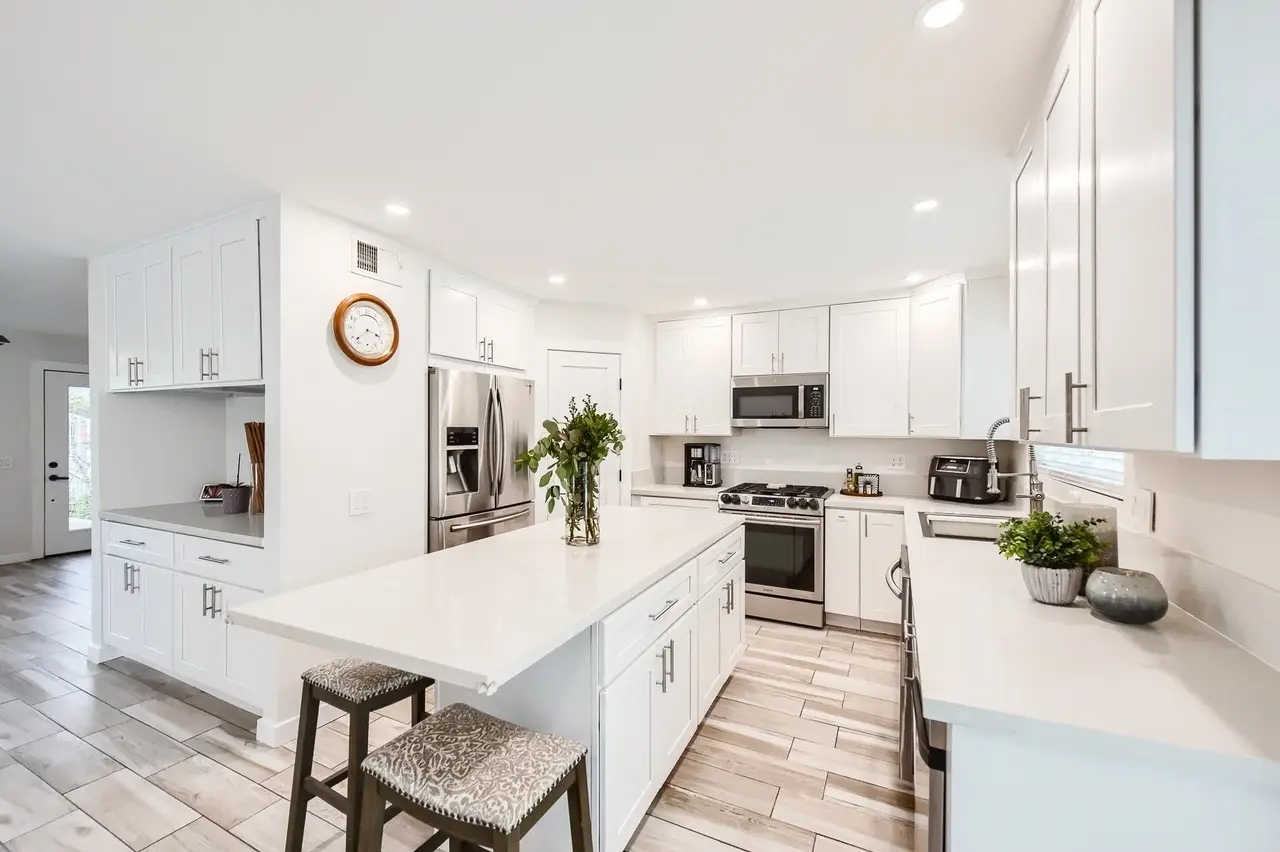
A smooth, sprayed 2K finish on a kitchen island, refinished in place.
Watch the reflection · 0:04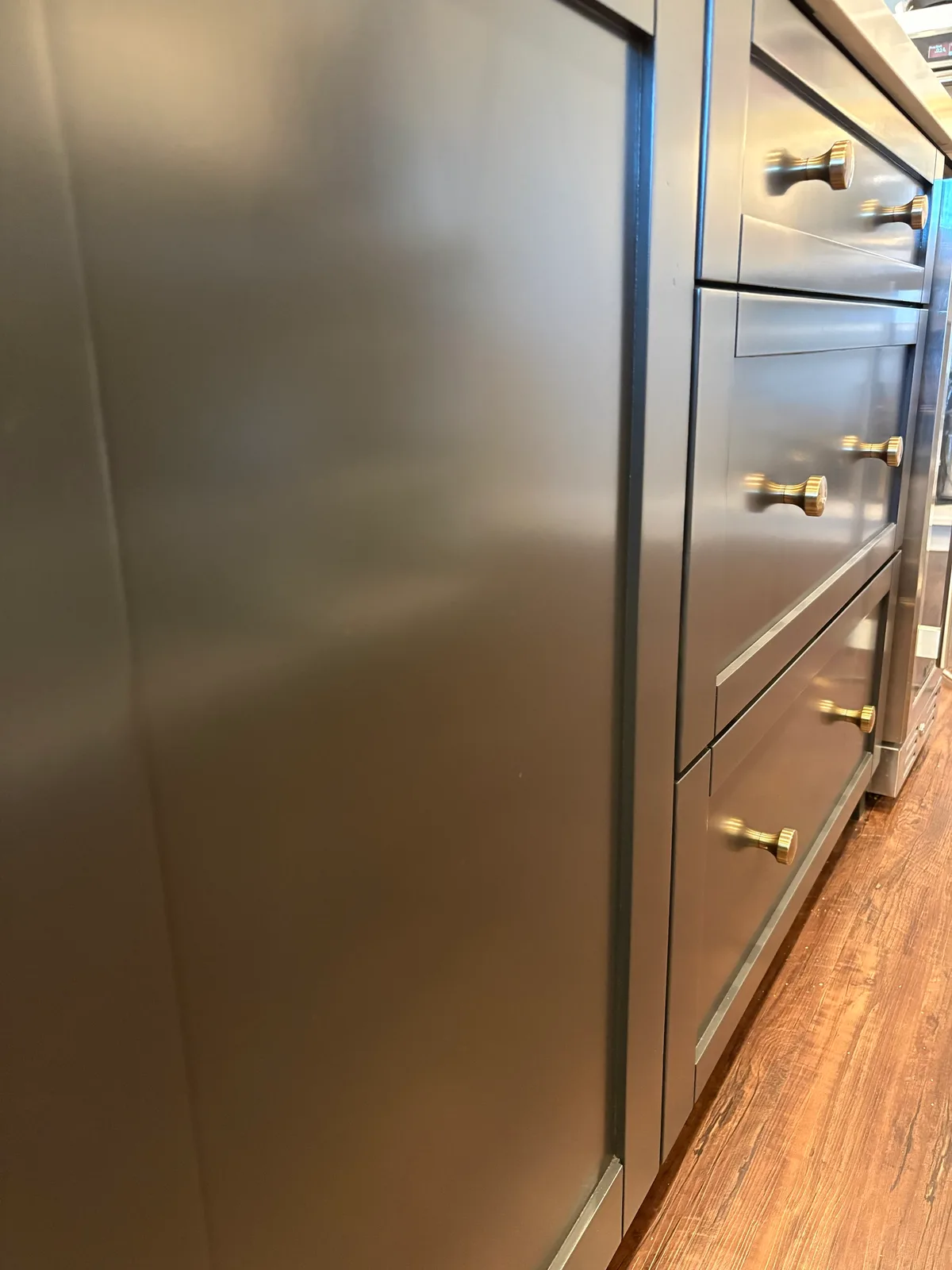
For Indian Wells kitchens, Tyler refinishes hardwoods such as walnut, white oak, cherry and maple.
What goes into that finish
The work behind the finish.
The time is in the preparation, surface corrections, sanding and sprayed coating system. These are photos from Tyler’s process.
The Cabinet Refinishing Process
Four production phases, from door removal through the final walkthrough. Tyler Fowler handles each project personally.

Protect & clean
Remove and label the doors. Mask the kitchen, degrease and prepare the surfaces.
Cabinet box exteriors are sprayed in place, inside a sealed, negative-pressure work area that is set up in the kitchen before sanding begins and stays in place through spraying.
A fan draws air through a regular filter and vents outdoors to help control airborne dust, overspray, and fumes within the work area.
Protect and prepare
The doors and drawer fronts are prepped at Tyler's shop. The cabinet boxes get the same prep in your kitchen, where you can see it done.
Prime & correct
The longest step. Two primer coats. Between them, every surface is skim-coated with glazing putty, dents and seams are spot-puttied, and it is all sanded smooth. Every surface is checked under bright inspection lights before the topcoat. Optional grain filling.
Sand smooth
Sand the corrections, primer and between topcoats. Each coat needs drying time.
Sanding is HEPA-vacuumed, and the cabinet exteriors are finished in 2K polyurethane.

Spray & reinstall
Spray two to three 2K topcoats. Reinstall and align the doors once ready.
Doors and drawer fronts are sprayed in the negative-pressure booth at the shop.
Cabinet boxes are sprayed in place inside the sealed work area.
Build the finish
The topcoats go on the same way as the primer: doors in the shop's spray booth, boxes in your kitchen's sealed, negative-pressure work area. Each coat gets the required drying time before the next step.
Back together
Required drying time, reinstallation, alignment, and the final walkthrough.
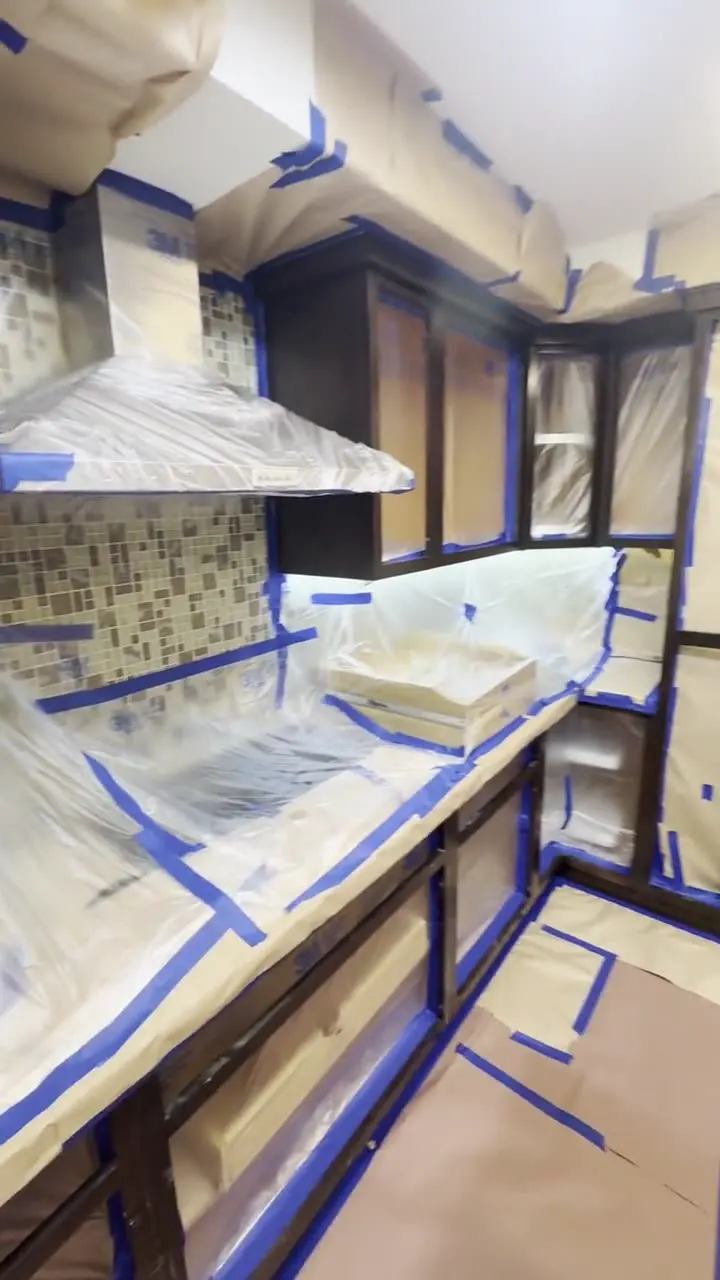
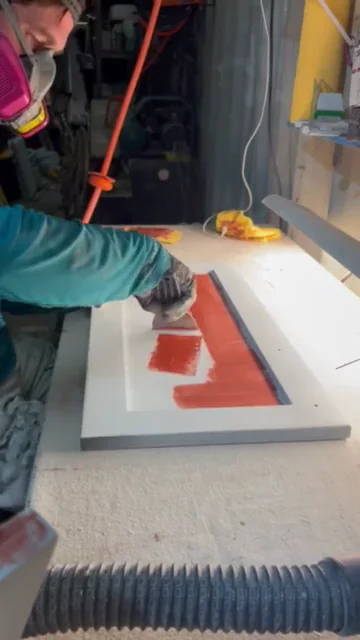
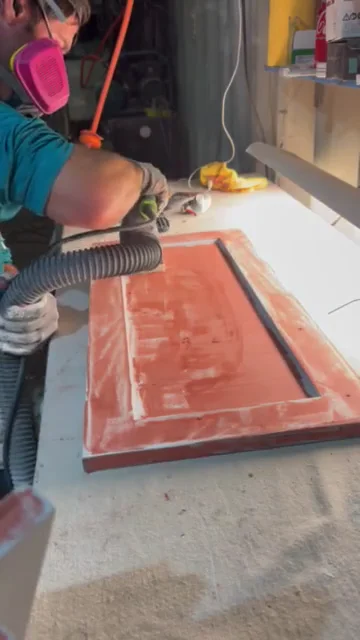
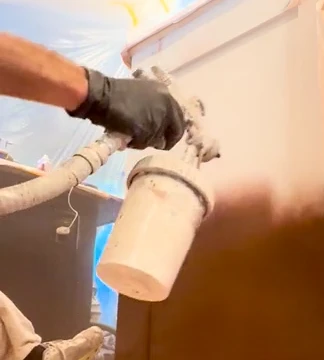
2K polyurethane costs more than one-part cabinet paint. Your quote also covers the preparation, shop finishing and drying time shown here.
Larger kitchens and grain filling take longer; your written quote gives the dates.
Quote and written warranty review →
More process close-ups
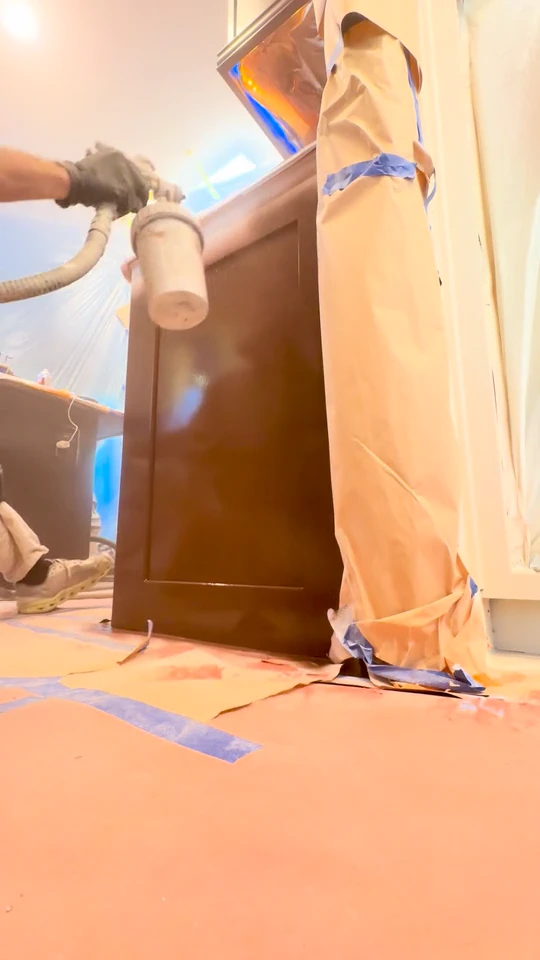
Finish proof
The finish, up close
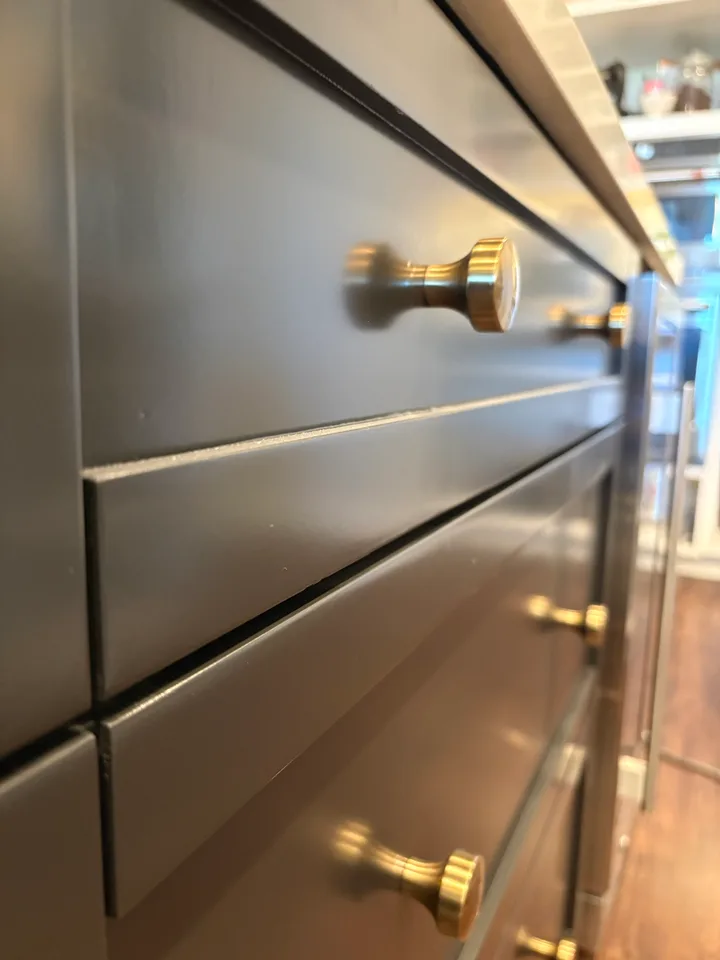
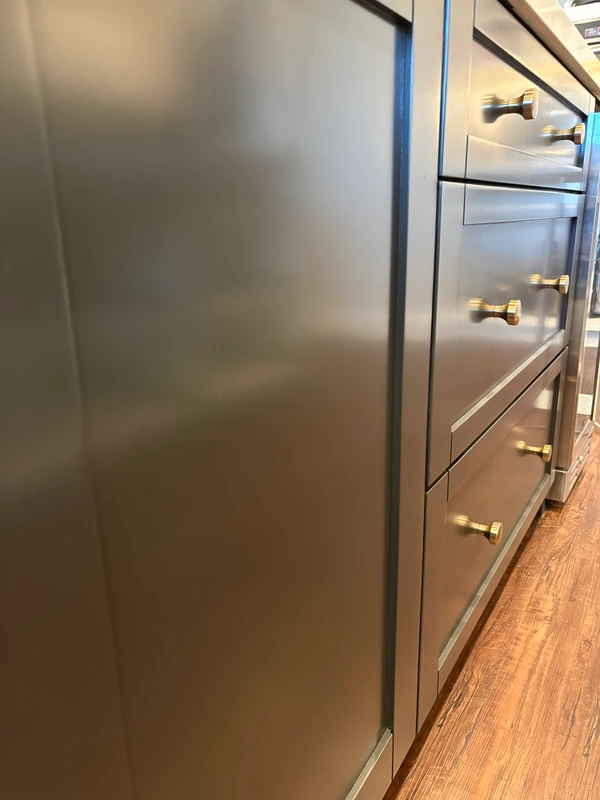
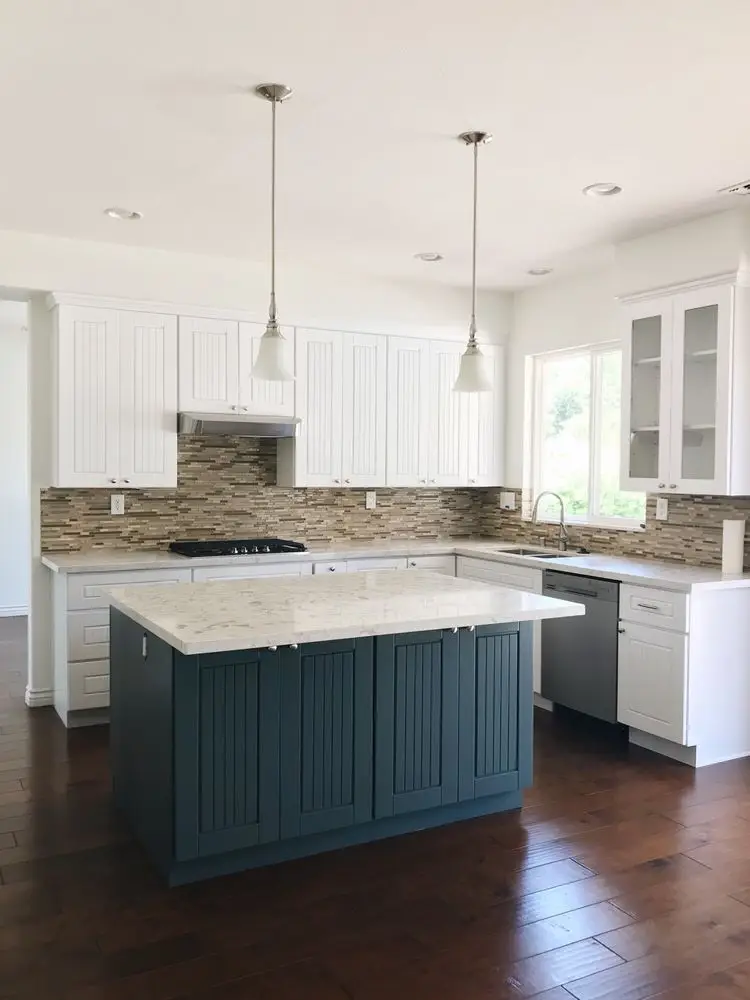
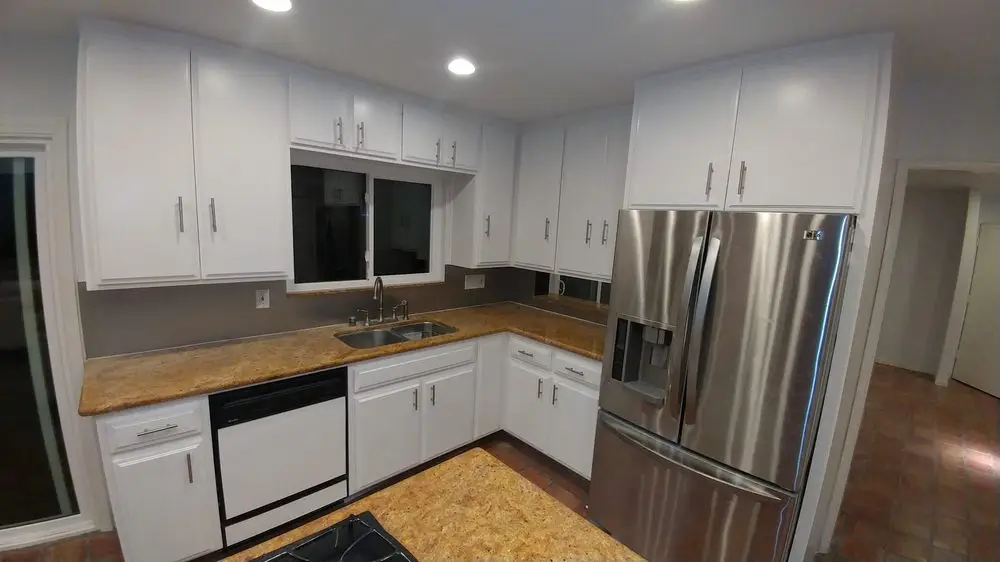
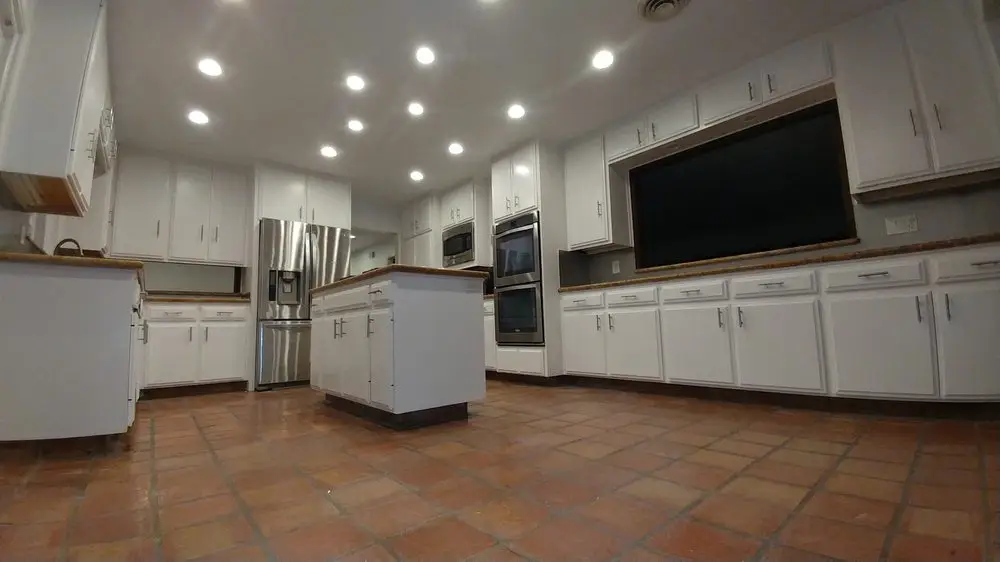
Real Results
Real kitchens. Same cabinets, finished in sprayed 2K polyurethane.
Factory-grade 2K polyurethane and sealed containment, with Tyler Fowler handling each project personally — finish quality that shows on a well-built estate kitchen. Serving Indian Wells and the Coachella Valley, with a 5-year written warranty.
Tyler brings a sample to your home and gives a fixed written quote after looking over the cabinets in person.
Finished island · Temecula · sprayed 2K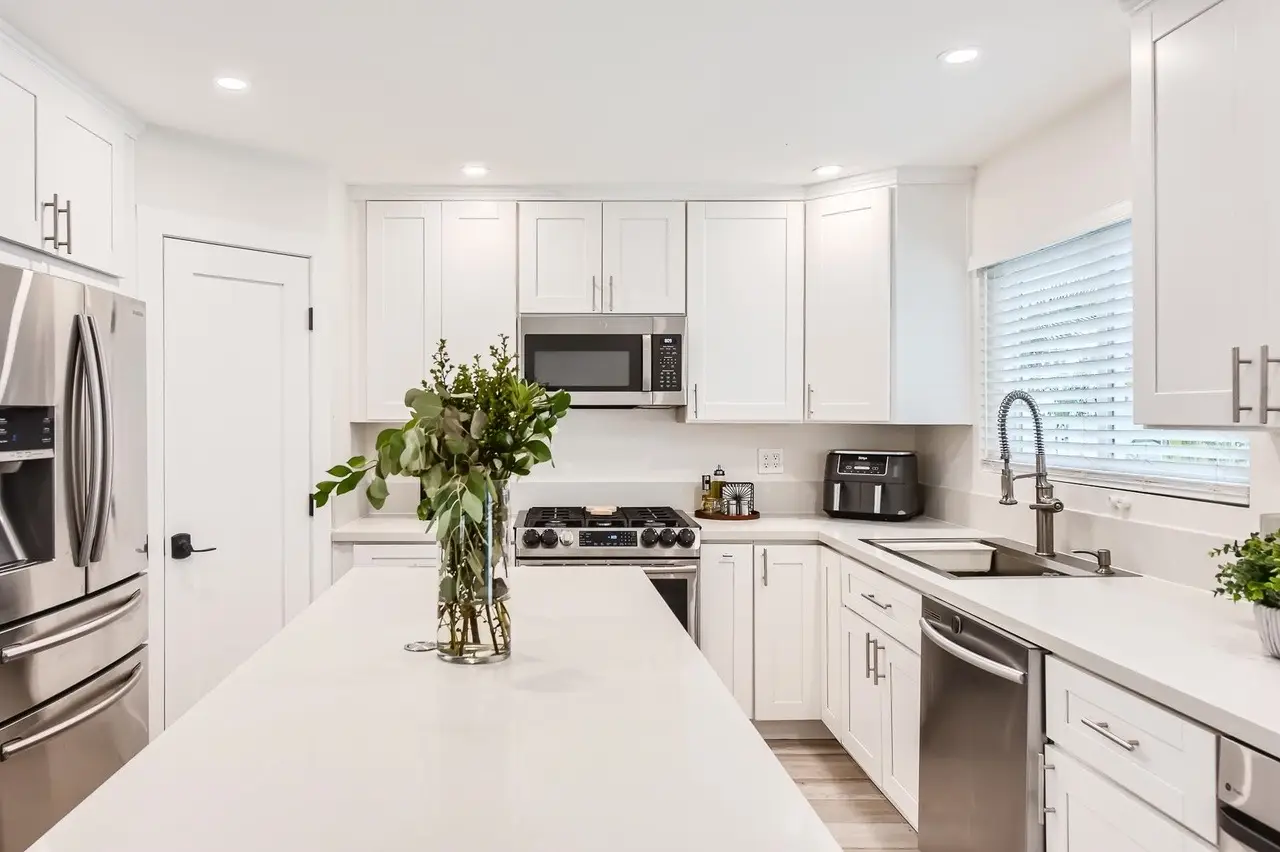
Cabinet refinishing in Indian Wells
Keep your kitchen.
Change the finish.
Sound cabinets and a layout you like? Refinish the cabinets you already own in sprayed 2K polyurethane.
- A sprayed cabinet finishTwo-component 2K polyurethane, with preparation and sanding between coats.
- Tyler handles your projectFrom the in-home estimate through reinstall and the final walkthrough.
- A written prep warrantyFive years for chipping, peeling or blistering caused by faulty preparation.
Cabinet refinishing pricing in Indian Wells
Southern California planning guidance — not a price list.
Standard single-color exterior cabinet refinishing commonly runs about $135–$185 per cabinet door and $95–$145 per drawer front before project-specific adjustments.
Each rate is per one physical cabinet door or drawer front — not per cabinet box.
These planning ranges include the standard exterior work on your cabinets: door fronts and backs, drawer fronts, face frames, box exteriors, toe kicks, and side panels. They also include removal and reinstall, preparation, 2K polyurethane, HEPA-vacuumed sanding, sealed negative-pressure containment, and the 5-year written warranty. Tyler Fowler handles each project personally. Oak grain remains visible unless you choose grain filling.
What moves the price
Three things set the price:
| Option | What it covers | Planning range |
|---|---|---|
| Cabinet door | Front and back painted; cabinet boxes, face frames, toe kicks, and side panels included | $135–$185 per cabinet door |
| Drawer front | Painted; same inclusions as the door | $95–$145 per drawer front |
| Grain filling (optional) | Light for shallow grain or heavy for deep grain such as red oak; door fronts only, or fronts and backs | adds $30–$85 per cabinet door; $10–$20 per drawer front |
| Painted interiors (optional) | The inside of the cabinet boxes, cleaned and sprayed; an average, since it depends on how many boxes there are and their condition | adds $35–$60 per cabinet door; $25–$45 per drawer front |
Small kitchens cost more per door, because the same sealed, negative-pressure work area still has to be built around them; failing old finishes, heavy damage, extra colors, repairs and specialty finishes also add to the price. A fan draws air through a regular filter and vents outdoors to help control airborne dust, overspray, and fumes within the work area.
Grain filling on frames and panels is quoted separately. Filling follows an approved cured sample. Heavy oak comes out smooth to the touch with the pores filled, but it is still real wood: under bright side light you will see gentle waves from the grain, not the dead-flat look of MDF.
Painted interiors are counted per cabinet box; corner, lazy-susan, sink, and extra-wide boxes take more.
A sound factory interior can be cleaned and sprayed. Damaged, peeling, or heavily greasy interiors need extra preparation and bonding primer.
Interiors are not grain-filled unless you request that separate work and approve a cured sample.
If you want a completely flat, MDF-style door on heavy oak, new doors are supplied and installed by a licensed cabinet partner. Parallel Painting finishes the new doors in the same 2K and refinishes the existing boxes to match; its painting license does not cover supplying or installing doors.
Tyler provides a fixed written quote after counting your doors and drawer fronts and looking over the cabinets in person.
For a full kitchen, the door and drawer-front count is the starting point.
See the complete cabinet-refinishing pricing guide · Read cabinet pricing and grain-fill FAQs
Pricing guidance last verified October 24, 2026.
Or call (951) 551-0583
Tyler or Melissa will reply to set up a visit. Tyler brings a sample to your home and gives a fixed written quote after looking over the cabinets in person.

Meet Tyler
Indian Wells kitchens call for careful project planning. Tyler Fowler handles each project personally through the final walkthrough. The process uses HEPA-vacuumed sanding, sealed containment, and sprayed 2K polyurethane.
- One jobat a time, Tyler on site
- 5 yearswritten warranty on prep
- Samplesin your own kitchen
- 2016CSLB #1015608 since
Why Homeowners Choose Parallel Painting
Sprayed 2K polyurethane, a sealed negative-pressure work area, careful preparation and a written 5-year warranty.
Sealed Containment
Tyler sets up a full containment zone for in-place cabinet work — plastic walls, sealed edges, negative air pressure — so the spray and sanding stages stay controlled. Source extraction, containment, and detailed cleanup work together to control dust. A fan draws air through a regular filter and vents outdoors to help control airborne dust, overspray, and fumes within the work area.
HEPA-Vacuumed Sanding
Professional Festool sanders connected to HEPA-filtered dust extraction. Combined with containment and detailed cleanup, this helps control airborne and settled sanding dust throughout the job.
2K Polyurethane
A factory-grade, two-component catalyzed polyurethane — sprayed with HVLP in two to three topcoats. Prime & correct. The longest step. Two primer coats. Between them, every surface is skim-coated with glazing putty, dents and seams are spot-puttied, and it is all sanded smooth. Every surface is checked under bright inspection lights before the topcoat. Optional grain filling. This cabinet system is selected for demanding desert kitchens. The 5-year written warranty covers faulty prep; the coating itself is covered by its manufacturer.
Owner-Operated
Tyler Fowler handles each project personally, from the estimate through the final walkthrough. CSLB #1015608 since 2016.
The Coating System
Sprayed 2K Polyurethane, Built Over Real Prep
Every door and drawer front comes off, gets cleaned and sanded, and is sprayed in the negative-pressure booth at Tyler's shop. The cabinet boxes get the same 2K polyurethane right in your kitchen, sprayed inside a sealed, negative-pressure work area that Tyler sets up before sanding begins and keeps in place through spraying. Sanding is HEPA-vacuumed. Priming and surface correction is the longest step of the job. After the first primer coat, every door, drawer front and cabinet surface is skim-glazed with glazing putty, dents, gouges and open seams are spot-puttied, and everything is sanded back smooth. Doors and drawer fronts are checked on inspection tables under bright shop lights, and the cabinet boxes are checked in the kitchen with LED inspection light bars, so dents, sanding marks and uneven spots are found and fixed in primer, before the 2K topcoat goes on. The second primer coat goes on over that corrected surface, so the 2K topcoat lays down on a flat, uniform base. Open-grain oak can also be grain-filled for a glass-smooth door. 2K is a two-component catalyzed finish: it chemically cures into a hard, tough shell instead of just drying like paint.
- Factory-grade two-component (2K) polyurethane, sprayed
- Doors and drawer fronts sprayed in a negative-pressure booth at the shop
- Cabinet boxes sprayed in place inside a sealed, negative-pressure work area
- HEPA-vacuumed sanding, multiple finish coats on every kitchen. Prime & correct. The longest step. Two primer coats. Between them, every surface is skim-coated with glazing putty, dents and seams are spot-puttied, and it is all sanded smooth. Every surface is checked under bright inspection lights before the topcoat. Optional grain filling.
Reviews
Client Reviews
Read reviews on Google and Yelp
“Tyler's work was meticulous. The cabinets look new. The wear, tear, and damage is gone. I could never have done this quality of work myself.”
“Tyler’s workmanship is exceptional! He’s meticulous when it comes to his work. He refinished our kitchen cabinets and they look amazing! I highly recommend Parallel Painting!”
“He turned our beech colored wood shaker cabinets into white cabinets and painted our island blue for a nice pop of color. You can tell Tyler takes pride in his work and is very meticulous to every single detail.”
“He also painted my kitchen cabinets and my bedroom doors and trim as well as the front door. So basically everything in my tiny 600 ft condo. It came out gorgeous. He's on time and a meticulous worker.”
Cabinet refinishing in Indian Wells: local details
Why do Indian Wells homeowners choose Parallel Painting for cabinet refinishing?
Indian Wells homeowners choose Parallel Painting for custom hardwood cabinet refinishing. Each project includes wood-specific preparation, HEPA-vacuumed sanding, sealed containment, and sprayed 2K polyurethane. Tyler Fowler handles each project personally. CSLB #1015608, licensed since 2016; each project includes a written 5-year warranty.
Parallel Painting refinishes custom cabinetry built with detailed craftsmanship, and Tyler treats each project accordingly.
A larger kitchen can include a central island with seating, extensive cabinetry, or built-in storage in an adjacent room. When the original finish begins to degrade under desert conditions, the scale of the cabinetry makes the deterioration hard to ignore.
Parallel Painting refinishes a range of hardwoods such as walnut, white oak, cherry, and maple. These are refinished with a careful, sprayed finish applied with professional HVLP equipment.
The hot, dry desert climate is as demanding in Indian Wells as anywhere in the valley. Strong summer heat, intense sunlight, low humidity, and day-to-night temperature changes put real demands on every coating system. When a cabinet's original factory finish ages over years of desert exposure, refinishing is one option to consider — during the in-home estimate, Tyler evaluates the existing finish and the condition of the boxes.
Tyler provides direct communication from the estimate through the final walkthrough. From Anza, Tyler reaches Indian Wells via CA-371 and CA-74 over the San Jacinto Mountains, then CA-111 east past Palm Desert.
The Vintage Club is a residential community in Indian Wells. The drive from Anza to Indian Wells is about 35 miles via CA-74.
What happens during cabinet refinishing in Indian Wells?
Plan on about a week of work in your kitchen and about a week for the doors and drawer fronts in the shop. Larger kitchens and grain filling take longer; your written quote gives the dates. Tyler removes every door, drawer, and piece of hardware, then encloses the kitchen in a sealed, negative-pressure work area. Doors and drawers are sprayed in the shop; Tyler finishes the cabinet frames on-site. At the end, Tyler reinstalls and aligns every piece. While the boxes are being sprayed, family and pets stay out of the sealed work area until Tyler gives the all-clear; he goes over the plan for your household before work starts. A fan draws air through a regular filter and vents outdoors to help control airborne dust, overspray, and fumes within the work area.
An Indian Wells project begins with an extensive in-home evaluation. Tyler spends an hour or more inspecting every cabinet component — opening doors, pulling drawers, identifying wood species across different zones, testing existing finish adhesion, and photographing areas of concern. In kitchens with rare wood species, he researches the specific preparation and compatibility requirements before quoting the project. The written estimate details every component and explains the preparation approach for each wood type and finish condition in your kitchen.
Preparation for custom cabinetry is highly detailed work. Every door profile, routed edge, and raised-panel center has to be properly sanded and prepared by hand where power tools cannot reach. Parallel Painting refinishes rare species such as walnut, quarter-sawn white oak, and rift-cut cherry, and each one demands its own stripping and prep approach. Preparation is adjusted to the wood species and finish.
After preparation, 2K polyurethane is sprayed via HVLP in multiple thin coats — two to three topcoats, sanded with 320 or 400 after the first topcoat, and 400 to 600 only before a third topcoat when needed. Priming and surface correction is the longest step of the job. After the first primer coat, every door, drawer front and cabinet surface is skim-glazed with glazing putty, dents, gouges and open seams are spot-puttied, and everything is sanded back smooth. Doors and drawer fronts are checked on inspection tables under bright shop lights, and the cabinet boxes are checked in the kitchen with LED inspection light bars, so dents, sanding marks and uneven spots are found and fixed in primer, before the 2K topcoat goes on. The second primer coat goes on over that corrected surface, so the 2K topcoat lays down on a flat, uniform base. Open-grain oak can also be grain-filled for a glass-smooth door. For large kitchens, Tyler works in zones — completing one section before moving to the next — to allow proper drying time between coats and consistent quality across all components.
Plan on about a week of work in your kitchen and about a week for the doors and drawer fronts in the shop. Larger kitchens and grain filling take longer; your written quote gives the dates. Tyler provides regular progress updates, including photographs for homeowners who may not be present during the work.
How does 2K polyurethane differ from standard cabinet paint?
Standard cabinet paint is a single-component coating that air-dries. 2K polyurethane is a two-component catalyzed system — resin plus a hardener that cross-link as they cure into a hard, smooth cabinet-grade finish. Tyler sprays 2K polyurethane with HVLP in two to three topcoats. Priming and surface correction is the longest step of the job. After the first primer coat, every door, drawer front and cabinet surface is skim-glazed with glazing putty, dents, gouges and open seams are spot-puttied, and everything is sanded back smooth. Doors and drawer fronts are checked on inspection tables under bright shop lights, and the cabinet boxes are checked in the kitchen with LED inspection light bars, so dents, sanding marks and uneven spots are found and fixed in primer, before the 2K topcoat goes on. The second primer coat goes on over that corrected surface, so the 2K topcoat lays down on a flat, uniform base. Open-grain oak can also be grain-filled for a glass-smooth door. Sanding uses 320 or 400 after the first topcoat, and 400 to 600 only before a third topcoat when needed.
Indian Wells kitchens may include rare and custom hardwoods such as walnut, quarter-sawn white oak, and rift-cut cherry. Tyler matches preparation to the wood and applies multiple controlled coats of 2K polyurethane for a smooth, refined result across detailed cabinet surfaces.
Every project is backed by a written 5-year warranty.
Cabinet Refinishing FAQ — Indian Wells
How much does cabinet refinishing cost in Indian Wells?
Standard single-color exterior cabinet refinishing commonly runs about $135–$185 per cabinet door and $95–$145 per drawer front before project-specific adjustments. This is Southern California planning guidance — not a price list. Each rate is per one physical cabinet door or drawer front — not per cabinet box. These planning ranges include the standard exterior work on your cabinets: door fronts and backs, drawer fronts, face frames, box exteriors, toe kicks, and side panels. They also include removal and reinstall, preparation, 2K polyurethane, HEPA-vacuumed sanding, sealed negative-pressure containment, and the 5-year written warranty. Tyler Fowler handles each project personally. Oak grain remains visible unless you choose grain filling. Three things set the price: Doors and drawer fronts: the per-piece range above, with the cabinet boxes, face frames, toe kicks, and side panels included. Grain filling: adds about $30–$85 per cabinet door and $10–$20 per drawer front, depending on how deep the grain is and whether the backs of the doors are filled too. Painted interiors: add about $35–$60 per cabinet door and $25–$45 per drawer front on average, depending on how many cabinets there are and the condition of the insides. Some interiors are prefinished and fine as they are. Small kitchens cost more per door, because the same sealed, negative-pressure work area still has to be built around them; failing old finishes, heavy damage, extra colors, repairs and specialty finishes also add to the price. A fan draws air through a regular filter and vents outdoors to help control airborne dust, overspray, and fumes within the work area. Tyler provides a fixed written quote after counting your doors and drawer fronts and looking over the cabinets in person. For a full kitchen, the door and drawer-front count is the starting point.
How long does cabinet refinishing take in Indian Wells?
Plan on about a week of work in your kitchen and about a week for the doors and drawer fronts in the shop. Larger kitchens and grain filling take longer; your written quote gives the dates. Tyler walks through the kitchen with you, removes every door, drawer front, and piece of hardware, and labels each for exact reinstallation. He encloses the kitchen in a sealed, negative-pressure work area with plastic walls, sealed edges, and an exhaust fan with a regular filter, vented outside. Doors and drawer fronts are prepared and sprayed in the negative-pressure booth at his shop; the cabinet frames are sprayed on-site inside the sealed work area. Tyler then reinstalls and aligns every piece and walks through the finished work with you. If your community requires it, Tyler coordinates access with the property manager in advance and provides photo and video updates throughout. A fan draws air through a regular filter and vents outdoors to help control airborne dust, overspray, and fumes within the work area.
How do you handle rare and exotic wood species in Indian Wells homes?
Cabinet refinishing covers wood species that require specialized knowledge — hardwoods such as walnut, quarter-sawn white oak, rift-cut cherry, and exotic imports. Tyler evaluates each wood species individually, selecting primers and preparation techniques matched to the wood's grain structure, density, and tannin content. Priming and surface correction is the longest step of the job. After the first primer coat, every door, drawer front and cabinet surface is skim-glazed with glazing putty, dents, gouges and open seams are spot-puttied, and everything is sanded back smooth. Doors and drawer fronts are checked on inspection tables under bright shop lights, and the cabinet boxes are checked in the kitchen with LED inspection light bars, so dents, sanding marks and uneven spots are found and fixed in primer, before the 2K topcoat goes on. The second primer coat goes on over that corrected surface, so the 2K topcoat lays down on a flat, uniform base. Open-grain oak can also be grain-filled for a glass-smooth door. For either a clear coat that shows the wood or a pigmented color change, Tyler prepares each substrate accordingly and finishes it in 2K polyurethane — a factory-grade, two-component catalyzed cabinet coating sprayed with HVLP.
Do you serve every community in Indian Wells?
Yes. Parallel Painting serves Indian Wells from Tyler’s Anza base via CA-371 and CA-74, then CA-111 east past Palm Desert. Cabinet projects may include alder, cherry, walnut, and quarter-sawn oak, where careful preparation and finish quality are especially visible. Tyler assesses each kitchen in person before quoting and applies the coating with HVLP spray equipment. Each project includes a written 5-year warranty.
What is the difference between cabinet painting and cabinet refinishing?
Standard cabinet painting uses single-component latex or alkyd paint that air-dries. The refinishing process uses 2K polyurethane — a factory-grade, two-component catalyzed system where the resin and a hardener cross-link as they cure into a hard, smooth cabinet-grade finish. Tyler sprays 2K polyurethane with professional HVLP equipment in two to three topcoats. Priming and surface correction is the longest step of the job. After the first primer coat, every door, drawer front and cabinet surface is skim-glazed with glazing putty, dents, gouges and open seams are spot-puttied, and everything is sanded back smooth. Doors and drawer fronts are checked on inspection tables under bright shop lights, and the cabinet boxes are checked in the kitchen with LED inspection light bars, so dents, sanding marks and uneven spots are found and fixed in primer, before the 2K topcoat goes on. The second primer coat goes on over that corrected surface, so the 2K topcoat lays down on a flat, uniform base. Open-grain oak can also be grain-filled for a glass-smooth door. After thorough surface preparation, sanding uses 320 or 400 after the first topcoat, and 400 to 600 only before a third topcoat when needed. Every project includes a five-year written warranty.
Or call Tyler: (951) 551-0583
Serving Indian Wells and Surrounding Areas
Parallel Painting serves Indian Wells and the rest of the Coachella Valley (Palm Desert, Palm Springs, Rancho Mirage, and La Quinta) from Tyler's Anza base via CA-371 and CA-74 over the San Jacinto Mountains, then CA-111 east past Palm Desert. Indian Wells sits between Palm Desert and La Quinta in the heart of the central Coachella Valley. Parallel Painting also serves homeowners in all surrounding communities:
Common Questions About Cabinet Refinishing
Before scheduling your estimate, many homeowners want to know what to expect from the process and how long the project will take. Detailed answers address two common questions:
- How Long Does Cabinet Refinishing Take?
A full phase-by-phase breakdown — what happens at each stage, what your kitchen looks like during the project, and what factors affect the schedule.
- Will Painted Cabinets Peel or Chip?
How surface preparation affects whether a finish lasts, and what the written 5-year warranty on preparation covers.
Related cabinet refinishing resources
Deeper detail on the Indian Wells cabinet refinishing process, warranty, and finish chemistry:
- → Cabinet painting and refinishing hub
- → Cabinet Refinishing Process
The production process, from door removal through the final walkthrough.
- → Cabinet painting cost guide
- → Cabinet refinishing FAQ
- → 2K polyurethane explained
- → 5-year written warranty
- → Cabinet refinishing cost factors
- → How to compare cabinet refinishing bids
- → Why owner-operated matters
- → When cabinet refinishing isn't a fit
- → Maintaining refinished cabinets
- → Meet Tyler Fowler
Next step
Ready for a Factory-Grade Finish on Your Cabinets?
Tyler takes one job at a time, and Melissa handles his schedule and the phone. Call or text for an in-home estimate.
Budgeting for this kitchen? See the Indian Wells cabinet refinishing cost breakdown and local scope questions.