
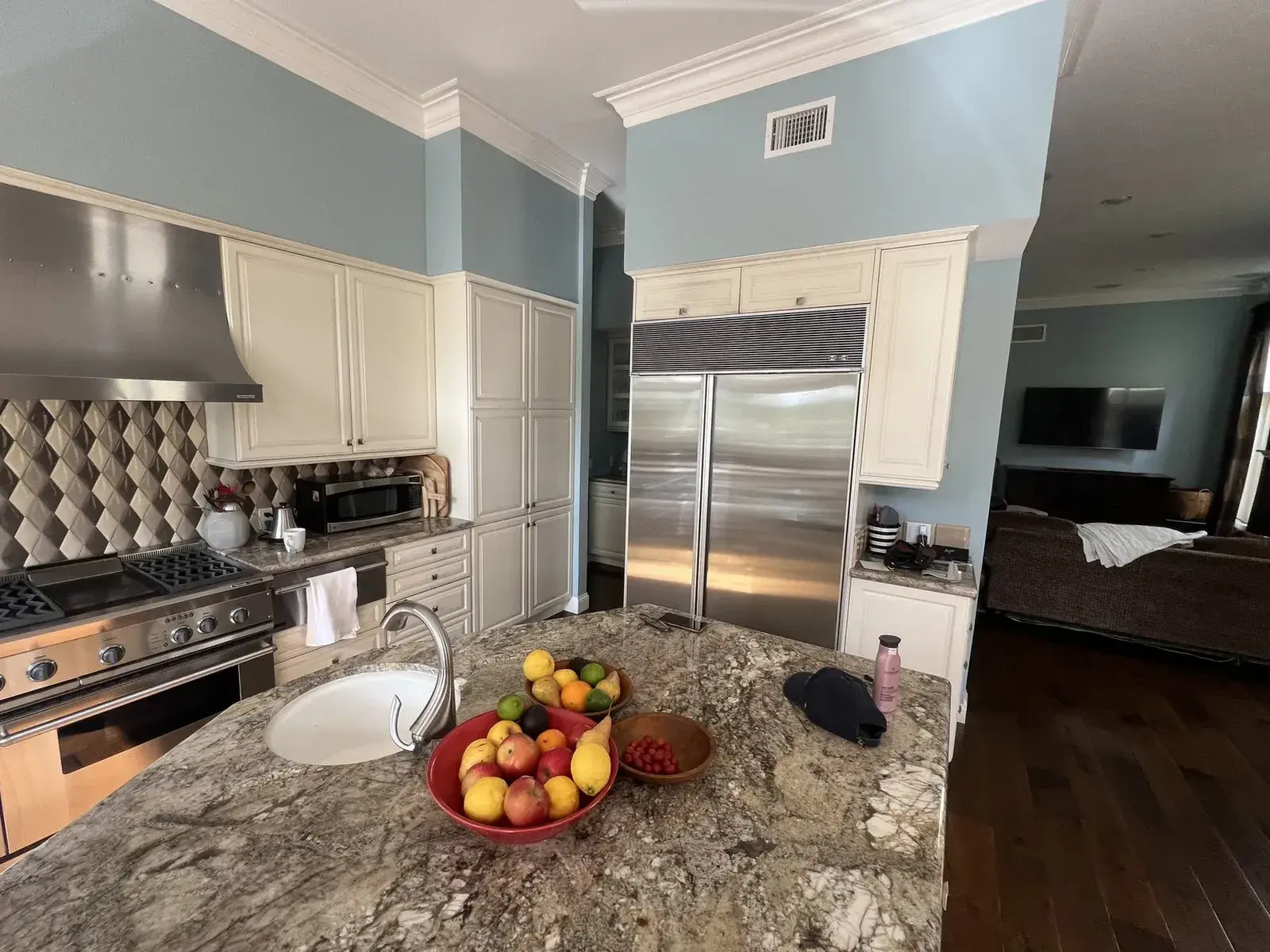
Painted cabinets peel when the finish loses adhesion to the surface below it. The usual causes are incomplete degreasing or sanding, an incompatible primer or coating, moisture, heat, or chemical exposure. The repair depends on whether the failure is isolated or widespread and whether the cabinet substrate is still sound.
You spent good money getting your cabinets painted. Maybe you did it yourself over a long weekend. Maybe you hired a contractor who seemed qualified. Either way, six months to a year later, the finish is failing. Paint is chipping at the edges. There’s peeling near the sink. The doors by the oven are getting sticky when it’s hot.
This is one of the most common calls I get. And the frustrating part is that it’s almost always preventable. Cabinet paint fails for specific, identifiable reasons — and once you understand them, you can avoid making the same mistake twice.
Here are the five most common reasons painted cabinets peel, and what to do about each one.
1. Inadequate Surface Preparation
This is the number one cause of cabinet paint failure, and it’s not close. Paint adhesion depends entirely on what’s underneath it. If the surface wasn’t properly prepared, even the best paint in the world will eventually let go.
What went wrong: The original finish wasn’t fully deglossed or sanded before painting. Kitchen grease — which accumulates invisibly on every cabinet surface near a stove — wasn’t chemically removed. The primer wasn’t compatible with the existing finish, or primer was skipped entirely.
What proper prep looks like: Every surface gets degreased with a dedicated cleaner (not just wiped down with a damp cloth). Then sanded with 150-grit — not a light scuff, but real sanding that removes the gloss uniformly. Then the first coat of high-build 2K primer goes on, followed by surface corrections, sanding with 220 grit, a second primer coat, and sanding with 320 grit before finish coats.
Thorough prep takes real time, and how long depends on the size and scope of the kitchen. If your painter finished the entire job — prep, prime, and topcoats — unusually fast, prep was likely rushed.
2. Wrong Product for the Application
The coating product matters for cabinets, and so does using it as the manufacturer intends.
What went wrong: The coating chosen wasn’t the right product for cabinet and trim use, or it was applied over an incompatible primer. Product, prep, application, and cure all have to line up, or the finish can fail.
What works: Ask for the exact coating product and current technical documents, and confirm the primer and prep are compatible with it. Compare written scopes rather than relying only on service labels.
Parallel Painting’s cabinet-finishing process uses a two-component (2K) polyurethane system. No finish is immune to wear. This is what we use at Parallel Painting, and every full refinish comes with a five-year written warranty.
3. Moisture Damage
Kitchens are wet environments. Steam from cooking, splashes during dish washing, condensation from dishwashers — moisture is constantly present, and it attacks paint from multiple angles.
What went wrong: Moisture worked its way behind the finish over time, weakening the bond between the coating and the wood. As the bond fails, peeling tends to start at edges and seams where moisture penetrates most easily.
This is why peeling almost always starts near sinks and dishwashers first. It’s not a coincidence — it’s where moisture exposure is highest.
What helps prevent it: The right product applied over proper prep. Ask each contractor for the exact preparation steps and the exact coating product, especially for cabinets near sinks and dishwashers. No finish is immune to wear, but the right product and proper prep make a real difference here.
4. Heat Exposure
Southern California kitchens deal with heat from two directions: a hot, dry climate that pushes interior temperatures up in summer, and direct heat from ovens, cooktops, and dishwasher exhaust.
What went wrong: The coating wasn’t well matched to the heat a cabinet sees. Cabinet doors adjacent to ovens face elevated temperatures during cooking, and a finish that isn’t suited to those conditions can soften or fail there.
Softened paint is vulnerable to everything: fingerprints embed, objects stick to the surface, and the film can pull away from the substrate. You might notice this as doors that feel “tacky” on hot days or surfaces that show every touch.
What helps: The right product for the conditions, applied over proper prep. Parallel Painting’s cabinet-finishing process uses a two-component (2K) polyurethane system. Product, prep, application, and cure all affect how a finish holds up near a heat source.
5. Grease and Chemical Exposure
Cooking produces airborne grease that deposits on every surface in the kitchen. Cleaning products designed to cut that grease are often harsh enough to damage paint films. It’s a lose-lose cycle.
What went wrong: Grease accumulates on cabinet surfaces over time. Homeowners scrub with kitchen cleaners or degreasers to remove it, and cleaning products strong enough to cut the grease can also be strong enough to damage some finishes. Over time, you may see dull patches, discoloration, and eventually adhesion failure where aggressive cleaning wore through the finish.
What helps: A product suited to kitchen cleaning, applied over proper prep. Parallel Painting’s cabinet-finishing process uses a two-component (2K) polyurethane system. No finish is immune to wear, so we still recommend reasonable care.
What To Do If Your Cabinets Are Already Peeling
If you’re dealing with a failed paint job right now, here are your realistic options:
Option A: Spot Repair
If the peeling is limited to a few doors or small areas, targeted repair is possible. This involves scraping loose paint, sanding the affected area back to sound paint or bare wood, priming, and repainting. The challenge is color matching and blending the repair into the surrounding finish. When the existing finish matches the repair coating, this can work. When you’re changing to a different finish entirely, spot repair usually isn’t viable.
At Parallel Painting, spot touch-ups are not a full refinish and do not carry our 5-year written warranty. On a failing finish, the warranty applies only when the failed coating is fully taken down to sound substrate and rebuilt.
Best for: Minor peeling on a handful of doors, cosmetic touch-ups, buying time before a full refinish.
Option B: Full Strip and Refinish
If the failure is widespread — peeling on multiple doors, chipping at every edge, yellowing or softening across the kitchen — the correct fix is to strip the failed paint completely and start over with proper preparation and a better coating system.
This costs more than the original paint job because stripping old paint adds significant labor. But it’s the only way to get a lasting result. You can’t paint over a failing paint job and expect different results — the same adhesion problems that caused the first failure tend to cause the next one.
Best for: Widespread failure, multiple symptoms, any situation where you want the problem solved properly the first time.
Option C: Cabinet Replacement
If the cabinets themselves are damaged — particleboard boxes that have swollen from moisture, doors that are warped or delaminating — refinishing may not be the right answer. In these cases, the substrate has failed, not just the finish, and replacement is the honest recommendation.
Best for: Damaged boxes or doors beyond cosmetic repair.
The Real Fix: Do It Right the First Time
Every peeling cabinet job I repair could have been prevented by doing three things correctly from the start:
- Thorough preparation — Chemical degreasing, proper sanding, and two coats of high-build 2K primer with surface corrections and sanding between coats.
- Correct coating system — Ask for the exact coating product and its current technical data sheet, and confirm it is compatible with the primer and prep. Parallel Painting’s cabinet-finishing process uses a two-component (2K) polyurethane system.
- Professional application — Spray application in a controlled environment by someone who refinishes cabinets regularly, not occasionally.
If your cabinets are peeling and you’re ready to fix the problem for the long term, get in touch for a free assessment. I’ll inspect the failure, tell you honestly what’s going on, and recommend the right solution — even if that solution is something other than hiring me.
Learn more about why painted cabinets peel and how cabinet painting compares to full refinishing. If your cabinets are already failing, read our full guide to fixing peeling painted cabinets.
See our guides to why painted cabinets chip and how long painted cabinets last.