
HEPA-Vacuumed Cabinet Sanding Contractor in Southern California: Two Controls, Zero Shortcuts
HEPA-vacuumed sanding inside a sealed, negative-pressure work area from the first pass of sandpaper through spraying. Two controls working together. Owner Tyler Fowler, CSLB #1015608, on every job.
Looking for our original process overview? See our updated process page here for the full containment setup. This page explains the two dust controls in detail: the HEPA vacuum at the sander, and the sealed, negative-pressure work area that goes up before the first pass of sandpaper and stays up through spraying.
Control 1: HEPA-Vacuumed Sanding
We hook industrial HEPA vacuums directly to sanders during cabinet prep. HEPA filters are rated to capture 99.97% of airborne particles at 0.3 microns. This is how we strip old finishes during the prep stage. Ask each contractor exactly how they handle sanding dust during prep.
The sanding stage is the high-dust stage of cabinet refinishing. A palm sander without vacuum coupling launches fine wood dust into the air. A drop cloth and open windows are a different approach than the equipment we run during prep.
Our approach: industrial HEPA vacuums hooked directly to the orbital and random-orbit sanders we use for cabinet prep. The vacuum runs at the sander during every prep pass rather than relying on downstream room air.
Prep sanding also serves a quality function. Good adhesion starts with proper prep, which is why the prep stage matters as much as the finishing stage.
What the Prep Sanding Stage Handles
- Fine wood dust from stripping and scuff-sanding cabinet surfaces
- Old finish particles from deglossing and surface preparation
- Grain filler dust from leveling open-grain species like oak
- Between-coat sanding dust before each successive primer and topcoat application
Control 2: The Sealed, Negative-Pressure Work Area
Before the first pass of sandpaper, we seal the work area and run a negative-pressure system. An exhaust fan pulls the air out through a filter and vents it outside, and the work area stays sealed through the last coat.
This is a different setup from the sanding vacuum: whole-room isolation rather than a vacuum at the sander. The two work together.
Spraying is where the sealed, negative-pressure work area matters most. A vacuum can't follow a spray gun around the room, so overspray and fumes are handled by the sealed room and its exhaust fan.
We build floor-to-ceiling plastic barrier walls around the work area with sealed seams along the floor, ceiling, and adjacent walls. Then we run a system that pulls air out of the sealed zone — creating negative pressure relative to the surrounding rooms.
Cabinet frames are sprayed on-site inside that sealed, negative-pressure work area. The coating is a two-component (2K) polyurethane system.
What Happens Inside the Sealed, Negative-Pressure Work Area
- Sanding, with a HEPA vacuum at the sander
- HVLP spray of the coating on cabinet frames on site
- Primer coats applied before the topcoats
- Fumes from spraying, vented outside by the exhaust fan
- Sealed barrier walls around the work area
Why Two Controls, Not One Marketing Claim
A single vague marketing phrase does not tell you what actually happens. Here is the honest breakdown: the HEPA vacuum catches dust at the sander, and the sealed, negative-pressure work area handles what gets into the air, from the first pass of sandpaper through the last coat. Parallel Painting runs both on every job. Tyler Fowler, CSLB #1015608 since 2016, does each one himself.
A contractor who makes a single broad claim, with a single approach, is either covering only part of the job or not describing what they do. A vacuum at the sander catches dust where it starts. A whole-room sealed setup handles what gets into the air, including overspray and fumes. Each control does a job the other can't.
When you ask a contractor about their process, the right answer covers both. If they give you a single answer, like "we use a containment system" or "we use HEPA vacuums", ask the follow-up: what do you do about the other one? The answer tells you how carefully they have thought about the process.
- Runs whenever sanding happens
- Vacuum connected to sander
- Handles: sanding dust, finish particles, grain filler dust
- When: during all sanding passes
- Whole-room isolation setup
- Plastic barriers + an exhaust fan vented outside
- Goes up before the first pass of sandpaper
- Stays up through the primer and topcoats
5-Year Written Warranty
Parallel Painting backs the work with a written 5-year warranty: if the finish chips, peels, or blisters because of faulty prep, Tyler comes back and repairs it. The process uses HEPA-vacuumed sanding inside a sealed, negative-pressure work area that goes up before any sanding and stays sealed through spraying.
Parallel Painting's cabinet-finishing process uses a two-component (2K) polyurethane system.
Parallel Painting backs the work with a written 5-year warranty: if the finish chips, peels, or blisters because of faulty prep, Tyler comes back and repairs it. Tyler Fowler, CSLB #1015608 since 2016, backs every project personally across Southwest Riverside County and the Coachella Valley.
Process FAQ
They are two separate controls that work together. The HEPA vacuum on the sander catches dust at the source. The sealed, negative-pressure work area goes up before the first pass of sandpaper and stays up through spraying; its exhaust fan pulls the air out through a filter and vents it outside. HEPA filters are rated to capture 99.97% of airborne particles at 0.3 microns, and Tyler uses them on the sanding vacuums, not on the exhaust.
No. No sanding method eliminates every particle. Parallel Painting uses HEPA-vacuumed sanding, a sealed negative-pressure work area vented outside, and detailed cleanup afterward. That's an honest description, not a no-dust promise.
Before the first pass of sandpaper, Tyler builds floor-to-ceiling plastic barrier walls around the work area with sealed edges, then runs an exhaust fan that pulls the air out through a filter and vents it outside, creating negative pressure inside. The work area stays sealed from sanding through spraying.
Tyler Fowler runs every job — CSLB #1015608 since 2016. I personally run the prep sanding and set up the finishing stage on every project. No crew chiefs, no subcontractors, no rotating teams. The same person you meet at the estimate is the one on site through prep and finish. Owner-operated from start to final walkthrough.
Yes. Parallel Painting backs the work with a written 5-year warranty: if the finish chips, peels, or blisters because of faulty prep, Tyler comes back and repairs it. It is a written document, not a verbal promise. Parallel Painting's cabinet-finishing process uses a two-component (2K) polyurethane system.
Or call Tyler: (951) 551-0583
Our Technology
Sprayed 2K Polyurethane, Built Over Real Prep
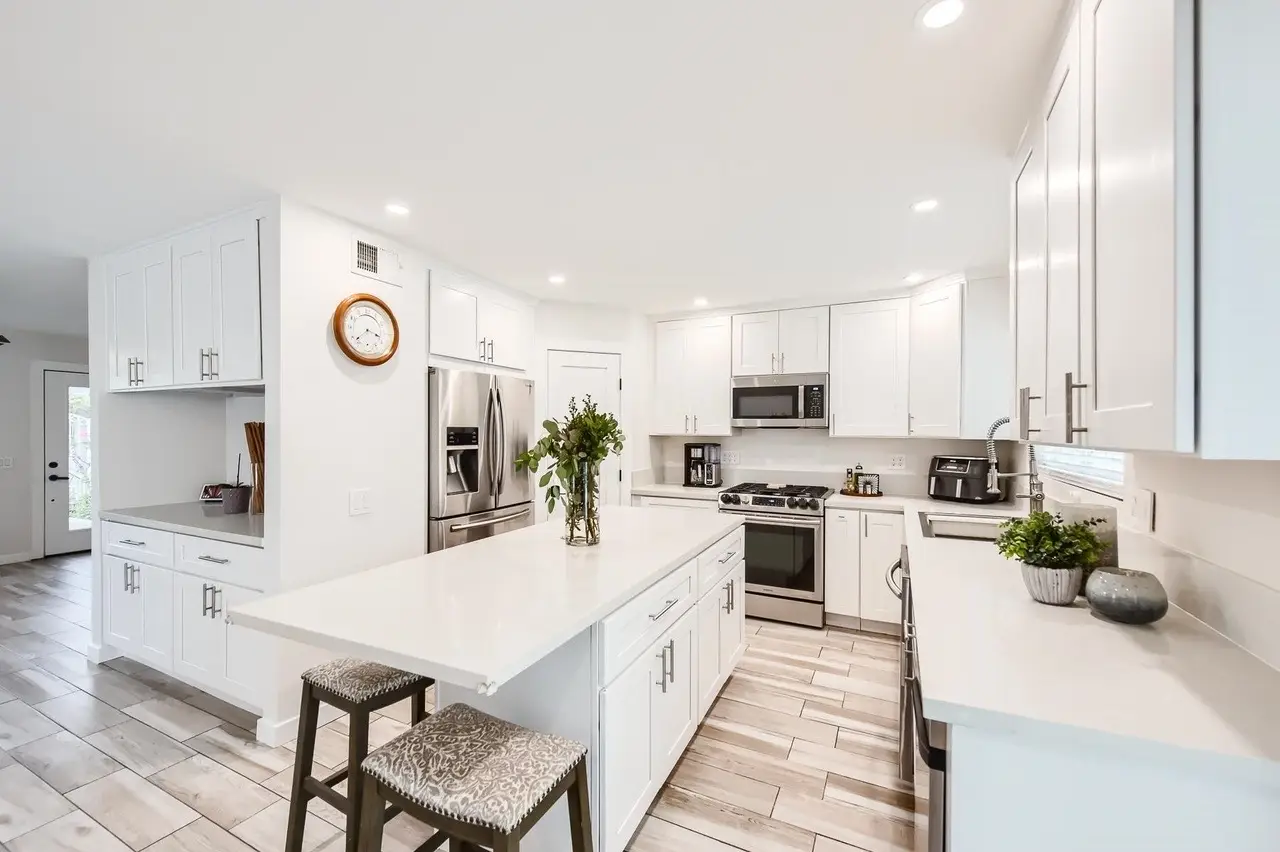
Every door and drawer front comes off, gets cleaned, sanded, and primed, and is sprayed in the negative-pressure booth at Tyler's shop. The cabinet boxes get the same 2K polyurethane right in your kitchen, sprayed inside a sealed, negative-pressure work area Tyler builds around them, after HEPA-vacuumed sanding. A fan pulls the air out through a filter and vents it outside, so dust and overspray go out the window instead of into the rest of your house. 2K is a two-component catalyzed finish: it chemically cures into a hard, tough shell instead of just drying like paint.
- Factory-grade two-component (2K) polyurethane, sprayed
- Doors and drawer fronts sprayed in a negative-pressure booth at the shop
- Cabinet boxes sprayed in place inside a sealed, negative-pressure work area
- HEPA-vacuumed sanding, primer, and multiple finish coats on every kitchen
Meet Tyler
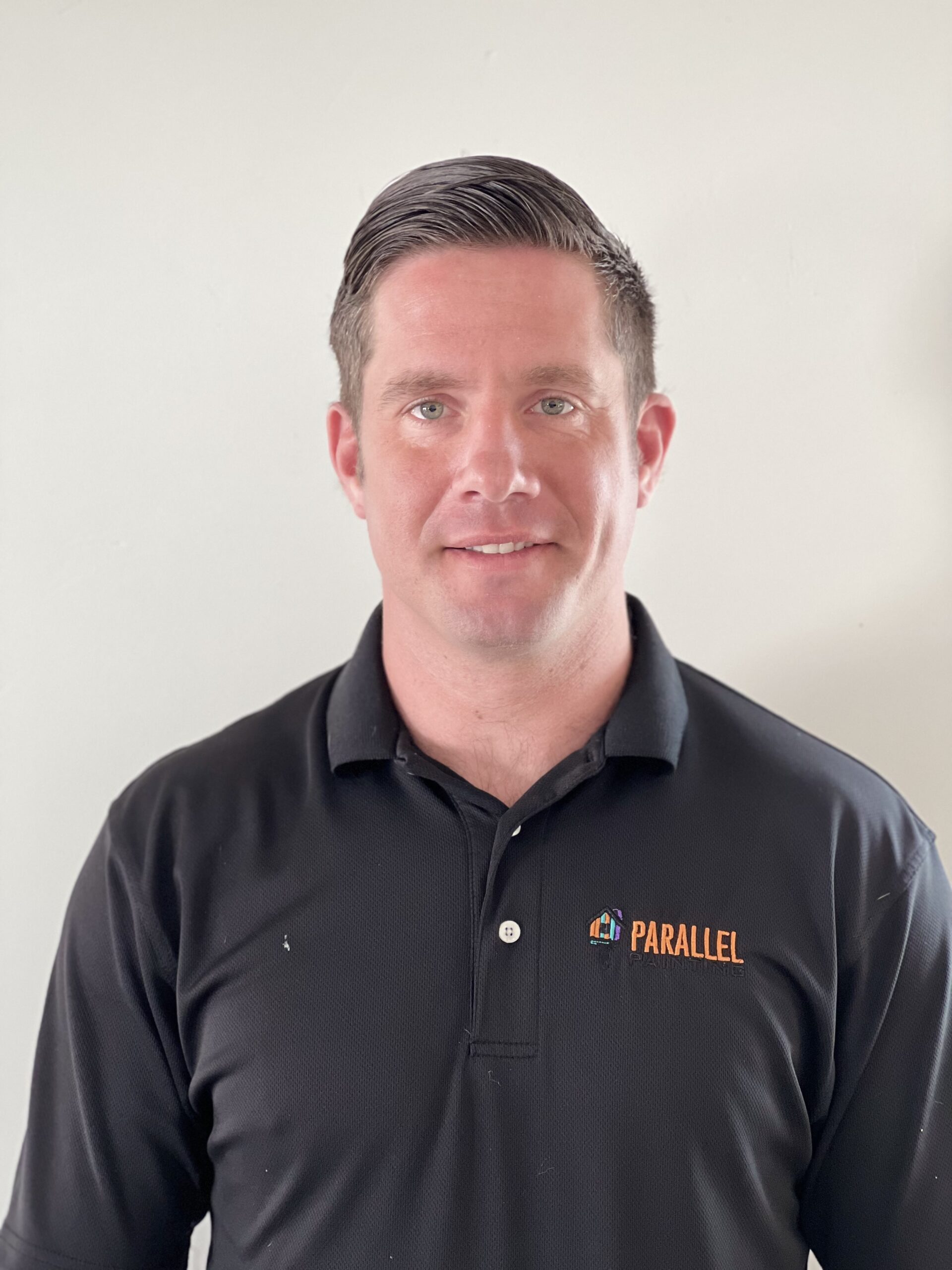
I'm Tyler Fowler, owner of Parallel Painting, CSLB #1015608 since 2016. I personally run the HEPA-vacuumed sanding and the sealed negative-pressure containment setup on every project — Southwest Riverside County and Coachella Valley. No crew chiefs, no subcontractors. Two controls working together, from sanding through spraying. That is why I can stand behind a 5-year written warranty.
Related Resources
- How Long Does Cabinet Refinishing Take?
Day-by-day timeline showing HEPA-vacuumed sanding inside the sealed, negative-pressure work area, from prep through spraying.
- Our Dust-Control Process Overview
The original containment page — containment walls, HEPA-rated extraction, and negative-pressure containment.
- What Is 2K Polyurethane?
The two-component (2K) polyurethane system used on every project.
- Cabinet Refinishing in Temecula
- Cabinet Refinishing in Murrieta
- Cabinet Refinishing in Palm Springs
- Cabinet Refinishing in Palm Desert
- Cabinet Refinishing — Coachella Valley Hub
What does HEPA-vacuumed sanding look like in practice — will I notice it happening?
During prep, the vacuum runs at the sander itself, connected to it directly. You will hear the sander and the vacuum running simultaneously. This is a vacuum at the sander rather than a general air filtration approach.
Does negative-pressure containment mean I cannot access part of my kitchen at all?
For the length of the job, the sealed, negative-pressure work area is off limits, so most families set up a temporary food-prep spot elsewhere. While the boxes are being sprayed, family and pets stay out of the sealed, negative-pressure work area until Tyler gives the all-clear; he goes over the plan for your household before work starts.
Ready for a Factory-Grade Finish on Your Cabinets?
Tyler takes one job at a time, and Melissa handles his schedule and the phone. Call or text for an in-home estimate.