
Why Is My Cabinet Paint Bubbling or Cracking?
Cabinet paint bubbles and cracks at cabinet-door joints are two different problems. Hairline cracks along the joints of a five-piece cabinet door usually come from the wood moving with humidity and temperature, and they are common. Bubbles or blisters in the paint point to trapped moisture, solvent or air, or paint that has lost its bond — and blistering paint must be removed back to a sound surface before repainting.
By Tyler Fowler, owner · CSLB #1015608 ·
How to tell which one you have
A thin line right at a door joint: wood expands and contracts as humidity changes. The paint can show a fine line where the frame pieces meet. On a five-piece door, that can be normal movement when the paint around it stays firmly attached.
Cracks with flakes or loose edges: paint cracking across your door or through several layers needs a closer look. Heavy coats, curing problems and poor bonding between coats can all cause broader cracking.
Raised bubbles or blisters: wood coatings can trap air, water or solvent during application and drying. Moisture or contamination can also make paint lose its grip. Tell Tyler whether the bubbles appeared during painting or after you started using the cabinets.
A leak or damp area nearby: get the water source fixed before refinishing. Leave the bubbles intact for inspection. Tyler checks the finish and the layers underneath, then explains what needs to happen before new paint goes on.
Text a few photos of the damage to (951) 551-0583 — we'll take a look and set up Tyler's in-person inspection.
Cabinet refinishing specialist
Sprayed cabinet finishes, installed by Tyler.
- CSLB #1015608
- Tyler on every job
- Two-component (2K) polyurethane
- 5-year written warranty
- Sealed containment and HEPA-vacuumed sanding
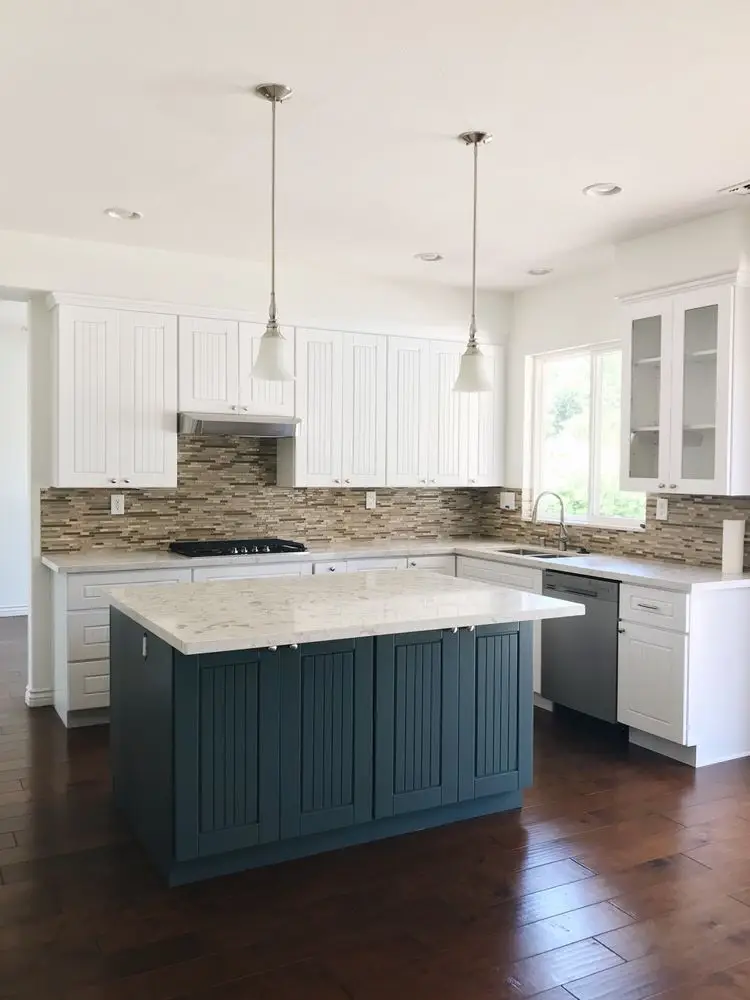
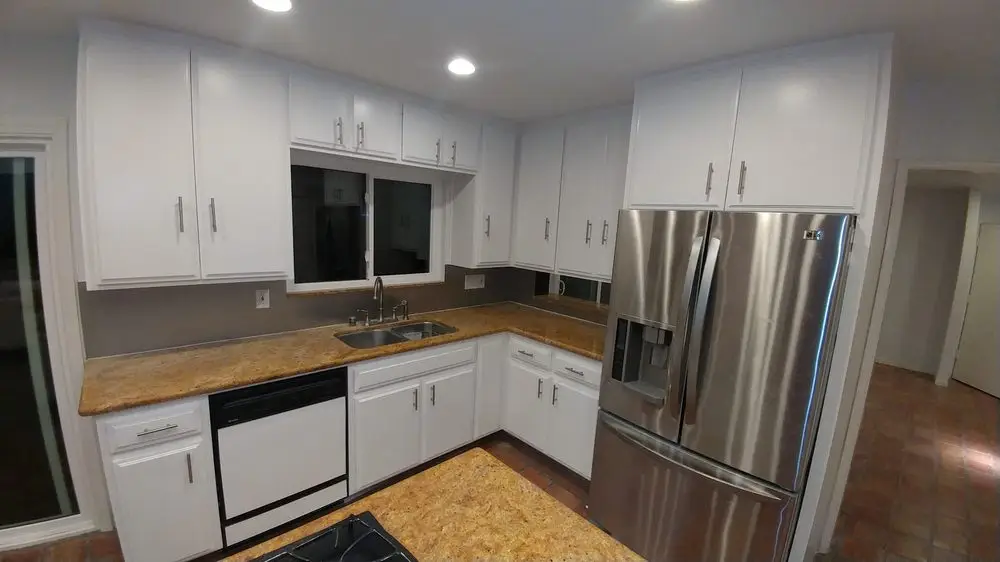
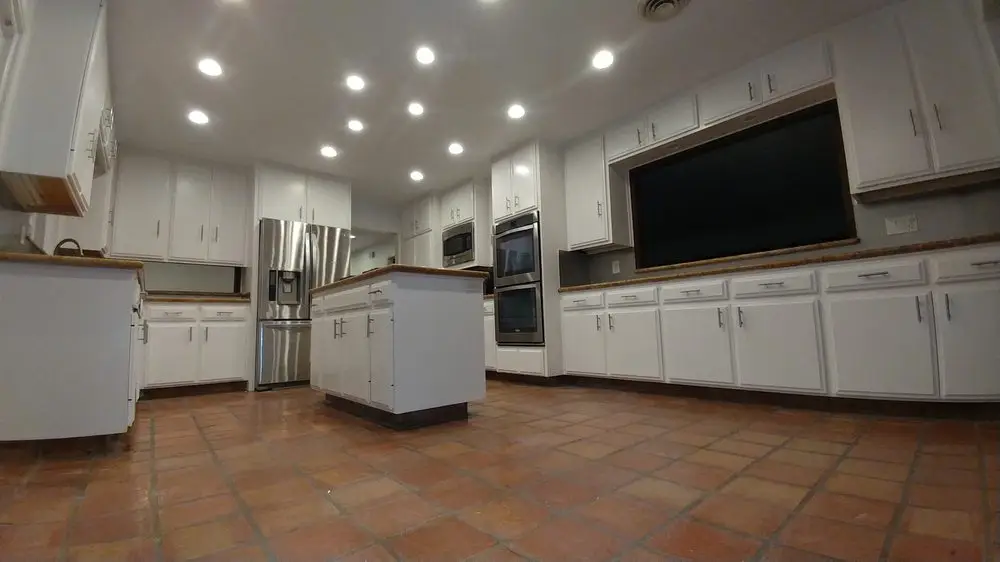
Cosmetic line or failing finish?
A fine line at a door joint and paint lifting off the face need different fixes. The joint line can be cosmetic. Loose, blistered or broadly cracked paint has to come off to a sound surface before repainting.
One isolated blister may be a local repair once its cause is fixed. Widespread failure needs the finish rebuilt. The amount of sound paint around the damage helps decide how much work your cabinets need.
Tyler shows you where the finish is failing and explains what has to come off. You get a clear repair plan for your doors, drawer fronts and boxes before committing to the work.
Can it be saved?
Yes, if the cabinet underneath is sound. A thin joint line without peeling doesn’t call for stripping the door. A local coating defect may be repairable once the cause is fixed. Loose or blistered paint still has to come off — another coat won’t secure what’s already lifting.
When blistering or peeling is widespread, we remove the failed finish fully to sound substrate. Any moisture source gets fixed before the new finish goes on. Tyler inspects every door, drawer front and box himself before recommending that work.
If a door or box is too damaged to hold a finish, we talk through repairing or replacing it first. Spot touch-ups are sometimes possible, without the 5-year warranty. Tyler tells you straight whether a local repair or a full refinish makes sense for your kitchen.
What we do on a full refinish
A rescue starts by taking the failed finish completely off, down to sound substrate. Sanding is HEPA-vacuumed, and your kitchen is sealed under negative-pressure containment. Then comes bonding primer and Italian 2K polyurethane — a two-part coating that hardens through a chemical reaction between its components.
Your doors and drawer fronts are sprayed in our shop booth. Cabinet boxes are sprayed in your kitchen under containment. Tyler is on every job. See how the full cabinet refinishing process works, or read why we use 2K polyurethane.
What the warranty covers here
Every full refinish we do comes with a 5-year written warranty. On a failing finish, that means the old paint comes fully off to sound substrate first — we never topcoat over someone else’s failing paint. Spot touch-ups are sometimes possible, but they don’t carry the 5-year warranty. Tyler explains which repair your cabinets need before you commit.
Cabinet refinishing in Temecula Valley and beyond
Parallel Painting provides premium cabinet refinishing for homeowners in Southwest Riverside County — including Temecula, Murrieta, Menifee, Wildomar, Lake Elsinore, and Fallbrook — as well as the Coachella Valley. Call or text Tyler to talk through your cabinets and the next step.
Frequently asked questions
Why is my cabinet paint cracking at the joints?
Wood movement with changes in humidity and temperature commonly leaves fine lines at door joints. If the surrounding paint stays firmly attached, the line can be cosmetic. Flaking or cracks spreading across your door need a closer look. Tyler checks which problem you have before recommending a repair.
Does bubbling cabinet paint mean moisture?
No, bubbles can also come from trapped air or solvent, or paint that has lost its bond. If there’s a leak, get it fixed before refinishing. Tyler checks the coating and the affected layers so the repair addresses the cause.
Can you paint over cracked or bubbling cabinet paint?
No, loose or blistered paint has to come off to a sound surface before repainting. Fix the cause first, then rebuild the finish. A thin joint line with firmly attached paint is a different case. Tyler can tell you whether your doors need a local repair or a full rescue.
Related guides and services
Start with the condition you can see
Call or text Tyler to discuss the surface, the history and the next step.