
Peeling Painted Cabinets? Here Is Whether They Can Be Refinished
We do not promise every kitchen can be rescued. We inspect the substrate first and tell you honestly whether it can be saved.
By Tyler Fowler, owner · CSLB #1015608 ·
The Short Answer
Painted cabinets that are peeling after one year, chipping at the edges, or sticky in the heat can usually be refinished — if what is underneath the paint is sound. The fix is a full strip to sound substrate and a rebuilt finish, not a fresh coat over the failure. Tyler inspects the doors, drawer fronts, and boxes first and tells you which case you are in.
Diagnose by symptom
Start with the condition you can see, then use the guide to prepare for an inspection.
- Why Is My Cabinet Paint Sticky? — Surface residue, curing questions and inspection limits.
- Can You Repaint Already Painted Cabinets? — Sound coatings, failed-finish removal and possible scope.
- Why Do Painted Cabinets Chip? — Location and exposed-layer observations before choosing a repair.
- Why Is My Cabinet Paint Bubbling or Cracking? — Separate fine joint lines from raised or lifting paint.
- Why Are My Painted Cabinets Turning Yellow? — Careful cleaning observations and oil/alkyd yellowing.
- How Long Do Painted Cabinets Last? — Durability factors and warranty questions without a lifespan promise.
Text a few photos of the damage to (951) 551-0583 — we'll take a look and set up Tyler's in-person inspection.
Cabinet refinishing specialist
Sprayed cabinet finishes, installed by Tyler.
- CSLB #1015608
- Tyler on every job
- Two-component (2K) polyurethane
- 5-year written warranty
- Sealed containment and HEPA-vacuumed sanding
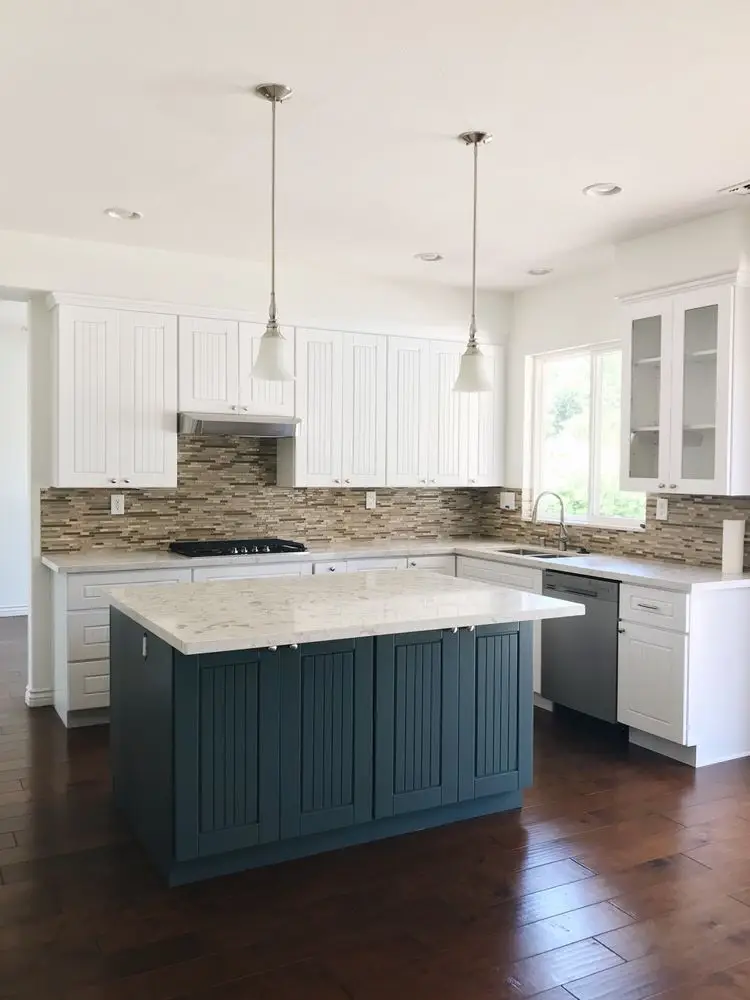
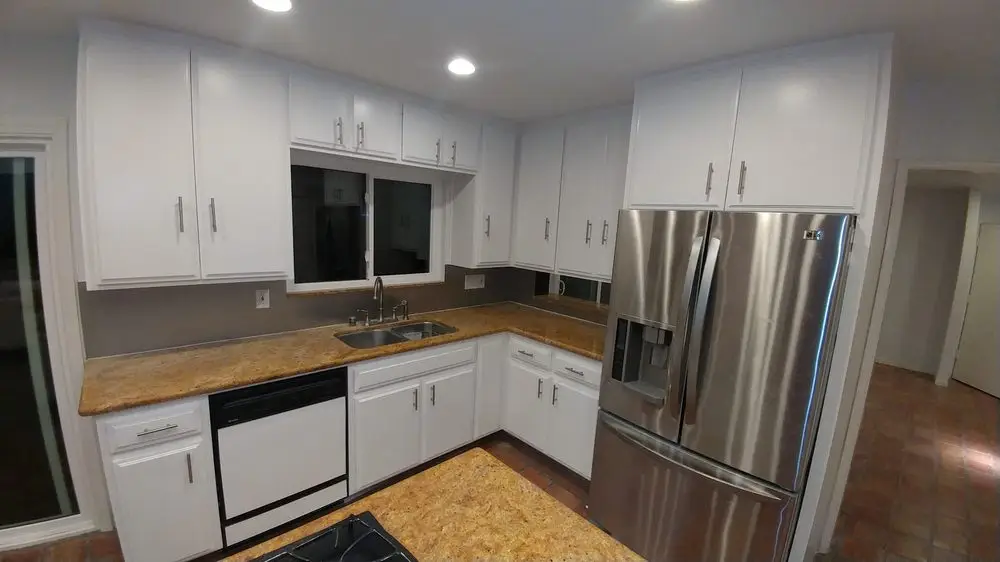
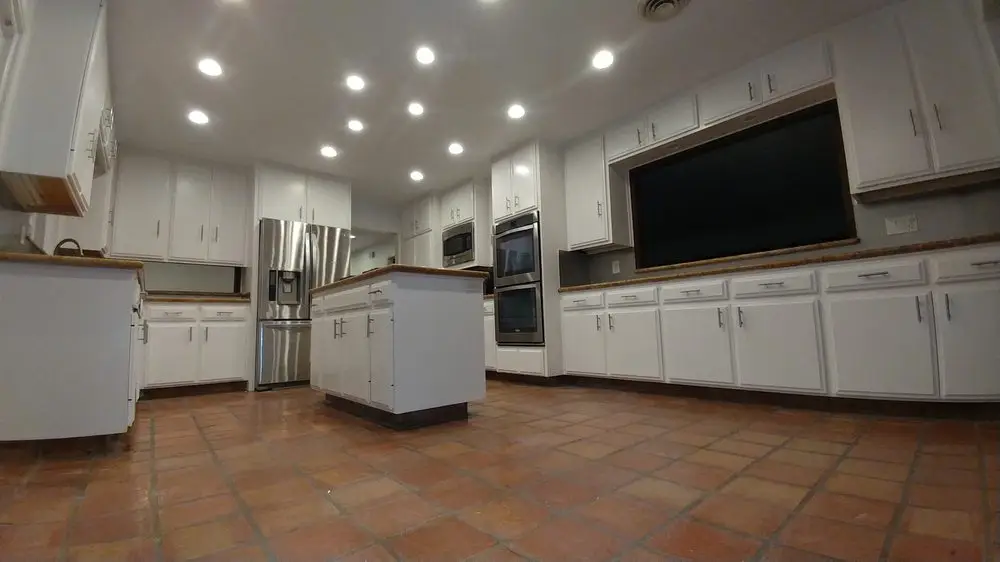
What a Failing Cabinet Finish Looks Like
Homeowners call us with a range of symptoms. Here is what we hear most often:
- •Peeling near the sink and dishwasher — lifting or curling at the base cabinets that see the most moisture.
- •Chipping at edges and corners — doors and drawer fronts losing paint where hands grab and bump daily.
- •Tacky or sticky doors on hot days — a soft film that grabs fingerprints and lets objects stick to it.
- •Yellowing — a finish that looked bright when new but has shifted color, especially near heat.
- •Coming off in sheets — whole sections releasing at once, a sign the bond failed over a wide area.
If any of this sounds like your kitchen, you are not alone — it is one of the most common calls we get, and it is usually fixable when the cabinet boxes themselves are still sound.
Why Painted Cabinets Fail
Whoever did the last job, the cause has to be diagnosed before anything is fixed — naming names does not change what happens next. Cabinet finishes almost always fail for the same handful of reasons, and they usually stack on top of each other:
Painted Cabinets Peeling After One Year
A finish that is peeling within a year failed early, and early failure almost always traces to one of the causes below rather than normal wear. It does not improve with time, and it is the clearest sign that a full strip, not a touch-up, is the fix.
Prep that was skipped or rushed. Grease left behind, gloss not fully sanded off, or an incompatible primer. Adhesion depends on the surface underneath — shortcut that step and the paint fails from day one.
The wrong product for a cabinet. Wall paint and general-purpose cabinet paint are not built like a catalyzed cabinet coating, and using the wrong one sets up an early failure.
Moisture, heat, and grease. Steam and splashes near sinks and dishwashers break the paint's bond to the wood, which is why peeling often starts there first. Sustained heat near a stove and daily grease finish off a film that was already thin on prep.
Test Your Own Cabinets: The 5-Second Acetone Rub
On a recent kitchen island repair, the homeowner believed the finish was conversion varnish, the hard catalyzed finish used on many factory cabinets. But it was chipping at the corners and flaking at the seams faster than a properly cured conversion varnish should. So Tyler tested it. Five seconds with acetone, and the rag came back blue.
What Tyler Found
The color came off and the surface went shiny instead of gummy, which points to a soft lacquer, not conversion varnish. A soft finish like that does not hold up to kitchen grease, water, and daily bumps the way a hard catalyzed finish does, so the corners chipped and the areas that got wet broke down first. The seams had also been caulked under the finish, and it had cracked along the caulked lines. Caulk moves with the wood, and a hard finish on top of it cannot stretch with it.
How to Test Yours
- 1.Pick a hidden spot, like the inside edge of a door or the back of an end panel.
- 2.Put on chemical-resistant gloves and dampen a clean white or light-colored rag with a little acetone from the hardware store. Follow the label on the can.
- 3.Rub firmly for about 5 to 10 seconds, then look at the rag and the spot you rubbed.
How to read it:
- •Rag stays basically clean: a hard, solvent-resistant finish, like a cured conversion varnish. Damage on a hard finish is usually wear, water, or a bonding problem, not a soft finish.
- •Color comes off, or the spot turns shiny or soft: a soft finish, usually lacquer, or a catalyzed finish that never cured properly. Either way it is more easily damaged by grease and water.
- •Turns gummy or rubbery: most likely latex paint.
- •Wrinkles or lifts: most likely oil-based paint.
Keep it quick and keep it hidden. On a soft finish, acetone can leave a permanent shiny or dull patch. Acetone vapor is highly flammable: open a window, and keep it away from the stove, pilot lights, smoking, and anything that can spark. Keep it off your skin and out of your eyes, and let the rag dry outside before throwing it away. If you would rather not test it yourself, just text photos of the damage.
The test tells you whether you have a hard finish or a soft one. It does not tell you whether your cabinets can be saved. That takes an inspection. Text a photo of your rag and the damage to (951) 551-0583 and Tyler will tell you what he sees. The finish Tyler sprays is Italian 2K polyurethane, a two-component catalyzed coating that cross-links as it cures, and he does the work himself.
Can Your Cabinets Be Saved?
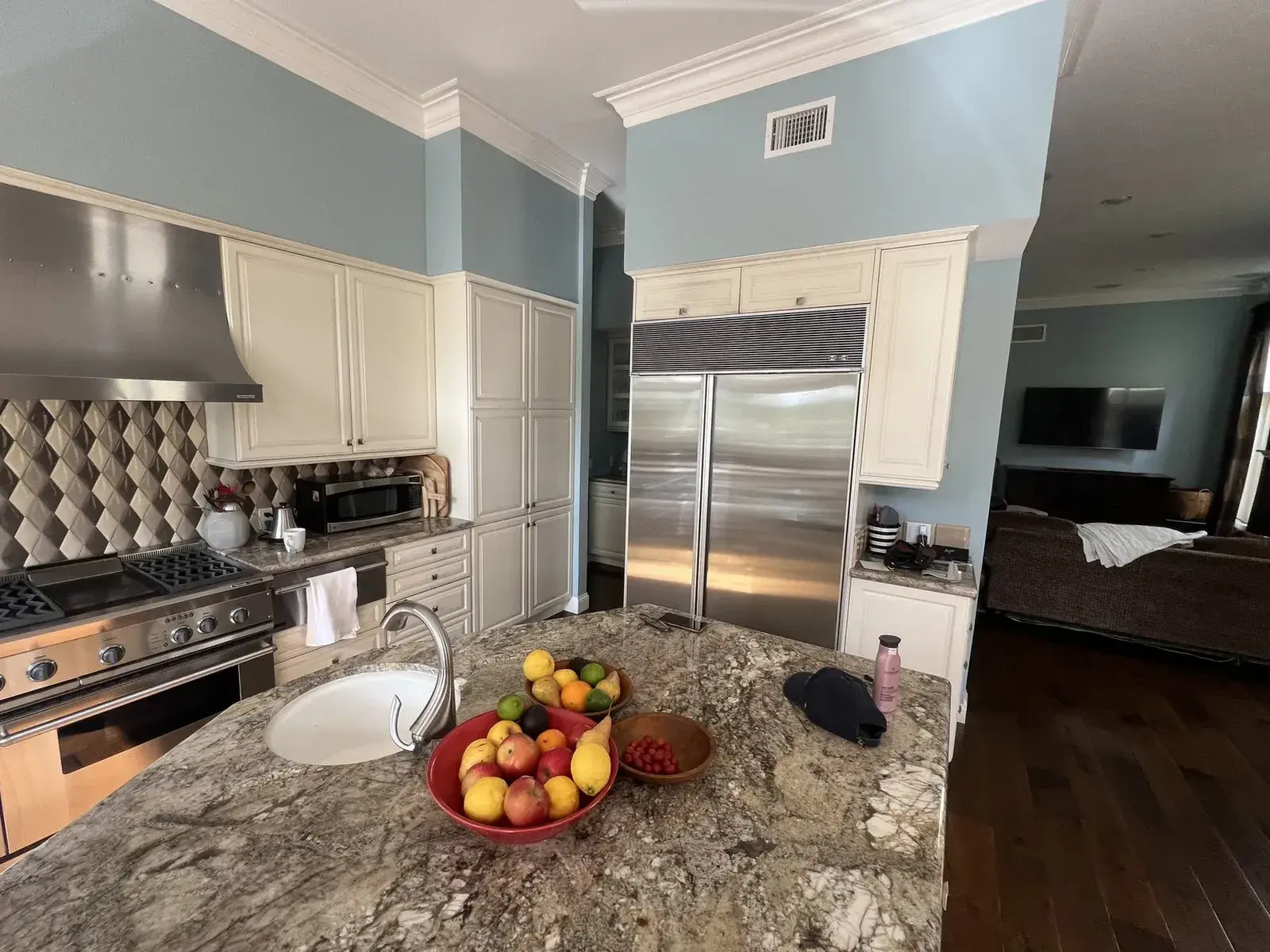
Usually, yes — if the substrate underneath is sound. Solid wood, plywood, or undamaged MDF is a surface problem, not a structural one. We strip the failed finish completely and rebuild from sound substrate.
Sometimes, no. Delaminating particleboard, lifting veneer or thermofoil, and boxes swollen or soft from water are substrate failures — no coating fixes a substrate that is coming apart underneath the paint. Damaged doors or drawer fronts can sometimes be replaced individually; compromised boxes can disqualify the kitchen. Tyler inspects before quoting, and if a kitchen does not qualify, he says so. See when cabinet refinishing is not a fit.
How We Rescue a Failed Cabinet Finish
Rescue work does not skip steps because a kitchen has already been painted once — if anything, it takes more prep than a first-time finish:
- 1.Strip to sound substrate. Failed paint is completely removed, back to sound substrate — not sanded lightly and covered.
- 2.HEPA-vacuumed sanding during prep, under sealed negative-pressure containment in the kitchen.
- 3.Bonding primer built to grip the freshly stripped surface, applied before any color or topcoat.
- 4.Italian 2K polyurethane. Doors and drawer fronts are sprayed in our shop booth; boxes are sprayed in place under containment.
Where We Do This Work
Parallel Painting fixes failed cabinet finishes for homeowners in the Temecula Valley and Southwest Riverside County — including Temecula, Murrieta, Menifee, Wildomar, Lake Elsinore, and Fallbrook — as well as the Coachella Valley. Whether the last job was DIY or hired out, the diagnosis and process are the same.
Sticky Cabinet Doors in Heat
In the Coachella Valley — Palm Desert, Palm Springs, Rancho Mirage, Indian Wells, and La Quinta — sticky, tacky cabinet doors are a common call on hot days. Heat is one diagnostic factor, not the whole story: some coatings stay prone to blocking or tack, particularly when undercured, applied too heavily, contaminated, or used outside their rated conditions, and a hot kitchen makes it show. Inspection and the product's technical data determine the cause. That is part of why we spray a catalyzed Italian 2K polyurethane — it cross-links as it cures into a harder film than air-dried paint.
Warranty on Rescue Work
When we take a rescue job, we strip the cabinets to sound substrate and rebuild with our standard process — so the same 5-year written workmanship warranty applies, signed by Tyler, not a verbal promise.
Spot touch-ups over an existing coating are sometimes an option, but they do not carry the 5-year warranty. On a failing finish, the warranty applies only when the failed coating is fully taken down to sound substrate and rebuilt. What we do not do is topcoat over someone else's failing paint. Topcoating without resolving the adhesion failure risks repeating it.
Questions to Ask Any Refinisher After a Bad Job
You already learned once that not every bid is equal. Ask:
- 1.What is the exact coating product, and can you show me its current technical data sheet?
- 2.What are the exact prep steps, in order, for a cabinet that already has failed paint on it?
- 3.Who is physically doing the work — the owner, an employee, or a subcontractor?
- 4.What is your CSLB license number, and is it active?
- 5.What are the written warranty terms — and will I get them signed, not just spoken?
Frequently Asked Questions
My cabinets were painted a year ago and the paint is peeling. Can they be fixed or do I need new cabinets?
Often, yes. Parallel Painting evaluates the doors, drawer fronts, boxes, and any veneer, thermofoil, or prior coating before quoting. Components with a sound substrate are stripped and refinished in Italian 2K polyurethane; damaged doors or fronts can sometimes be replaced individually; boxes that are delaminating or water-damaged can disqualify the kitchen. Tyler tells you which case you are in after inspecting, not before.
Can you paint over peeling cabinet paint?
No. Painting over peeling cabinet paint leaves the adhesion failure underneath unresolved, and the new finish risks failing along the same lines. Parallel Painting removes failed paint completely before applying anything new — there is no shortcut to a lasting result.
Why do painted cabinets peel near the sink and dishwasher first?
Cabinets near a sink and dishwasher take the most moisture in the kitchen — splashes, steam, and the occasional leak work behind the paint film and break its bond to the wood. Once the bond fails at the edges, peeling spreads inward. It is one of the first places Parallel Painting checks during an inspection.
Why do my painted cabinet doors feel sticky or tacky on hot days?
Sticky or tacky doors usually mean the coating is blocking. Some coatings stay prone to tack, particularly when undercured, applied too heavily, contaminated, or used outside their rated conditions, and a hot kitchen makes it show. Inspection and the product's technical data determine the cause. Parallel Painting sprays a catalyzed Italian 2K polyurethane, which cross-links as it cures into a harder film than air-dried paint.
Who fixes failed cabinet paint jobs in Temecula Valley and the Coachella Valley?
Parallel Painting fixes failed cabinet paint jobs throughout the Temecula Valley — Temecula, Murrieta, Menifee, Wildomar, Lake Elsinore, and Fallbrook — and the Coachella Valley. Tyler Fowler, the owner, inspects every kitchen personally before quoting a rescue job.
Does a warranty cover cabinets that were painted by someone else and refinished by you?
Yes. Once Parallel Painting strips a cabinet to sound substrate and refinishes it with our standard process, the same 5-year written workmanship warranty applies as on any other full refinish. Spot touch-ups over an existing coating are sometimes possible, but they do not carry the 5-year warranty. We also do not topcoat over someone else's failing paint.
What should I ask a cabinet refinisher after a bad job?
Ask for the exact coating product and its technical data sheet, the exact prep steps, who is physically doing the work, the contractor's CSLB license number, and the written warranty terms before you sign anything. A refinisher who cannot answer all five plainly is a bigger risk when you are choosing for the second time.
Related Resources
- Why Painted Cabinets Peel (Fix Guide) — Five common causes and your repair options.
- Cabinet Refinishing Warranty Questions — What to ask before you sign.
- How to Choose a Cabinet Refinishing Contractor — What separates a lasting job from a repeat failure.
Related Services
Cabinet Refinishing
Our full Italian 2K polyurethane refinishing process and warranty.
Will Painted Cabinets Peel?
What determines whether a new finish lasts.
When Cabinet Refinishing Is Not a Fit
The substrate conditions that disqualify a kitchen.
2K Polyurethane Finish
The factory-grade, two-component coating we spray on every cabinet.
Dust-Control Process
HEPA-vacuumed sanding and sealed negative-pressure containment.
Cabinet Refinishing in Temecula
Rescue and first-time refinishing for Temecula kitchens.
Cabinet Refinishing in Palm Desert
Refinishing and finish rescue for Palm Desert kitchens.
Designer Wallpaper
Our other flagship specialty — same owner-on-every-job standard.
Cabinets Failing? Get a Straight Answer.
Call Tyler. He will inspect the finish, tell you whether it can be saved, and quote it in person.