
Can You Repaint Already Painted Cabinets?
Already-painted cabinets can be repainted if the existing paint is still well bonded. Clean it, scuff-sand it, prime where needed, and recoat. If the old paint is peeling, chipping off in sheets, or remains soft after its specified cure, a new coat will fail along with it, so that finish has to be fully removed to sound substrate first. Parallel Painting prepares failing finishes back to a sound substrate before applying a new coating.
By Tyler Fowler, owner · CSLB #1015608 ·
Or call (951) 551-0583
Tyler brings a sample to your home and gives a fixed written quote after looking over the cabinets in person.
- CSLB #1015608
- Yelp: 56 reviews, 4.8-star rating · Google: 10 reviews, 5.0-star rating
- 5-Year Written Warranty
See the finish up close · 0:12
The Finished Result
A black kitchen island in Temecula, prepared and sprayed in 2K polyurethane by Tyler.
Tap play to inspect the finish. 0:12 · No sound.
Watch a black kitchen island refinished in Temecula (0:12)
How to tell which one you have
A color change on sound paint: your paint is firm after curing, stays attached and has no peeling edges or loose sheets. That’s a base Parallel Painting can prepare for a recoat. Brush marks or a color you don’t like don’t mean the paint has lost its bond.
Peeling or sheet-like chips: the paint has let go of the cabinet or the coat underneath. Another coat leaves that weak layer in place. The failing paint has to come off before Parallel Painting rebuilds the finish.
Soft paint: dry to the touch doesn’t mean fully cured. Give new paint the time and conditions its maker specifies. If it’s still soft after that, the problem is in the finish. It needs fixing before anything goes over it.
Tyler looks at every door, drawer front and box himself. He checks the sound areas as well as the damaged ones and tells you straight what can stay and what has to come off.
What goes into that finish
The work behind the finish.
The time is in the preparation, surface corrections, sanding and sprayed coating system. These are photos from Tyler’s process.

Protect & clean
Remove and label the doors. Mask the kitchen, degrease and prepare the surfaces.
Prime & correct
The longest step. Two primer coats. Between them, every surface is skim-coated with glazing putty, dents and seams are spot-puttied, and it is all sanded smooth. Every surface is checked under bright inspection lights before the topcoat. Optional grain filling.
Sand smooth
Sand the corrections, primer and between topcoats. Each coat needs drying time.
Spray & reinstall
Spray two to three 2K topcoats. Reinstall and align the doors once ready.
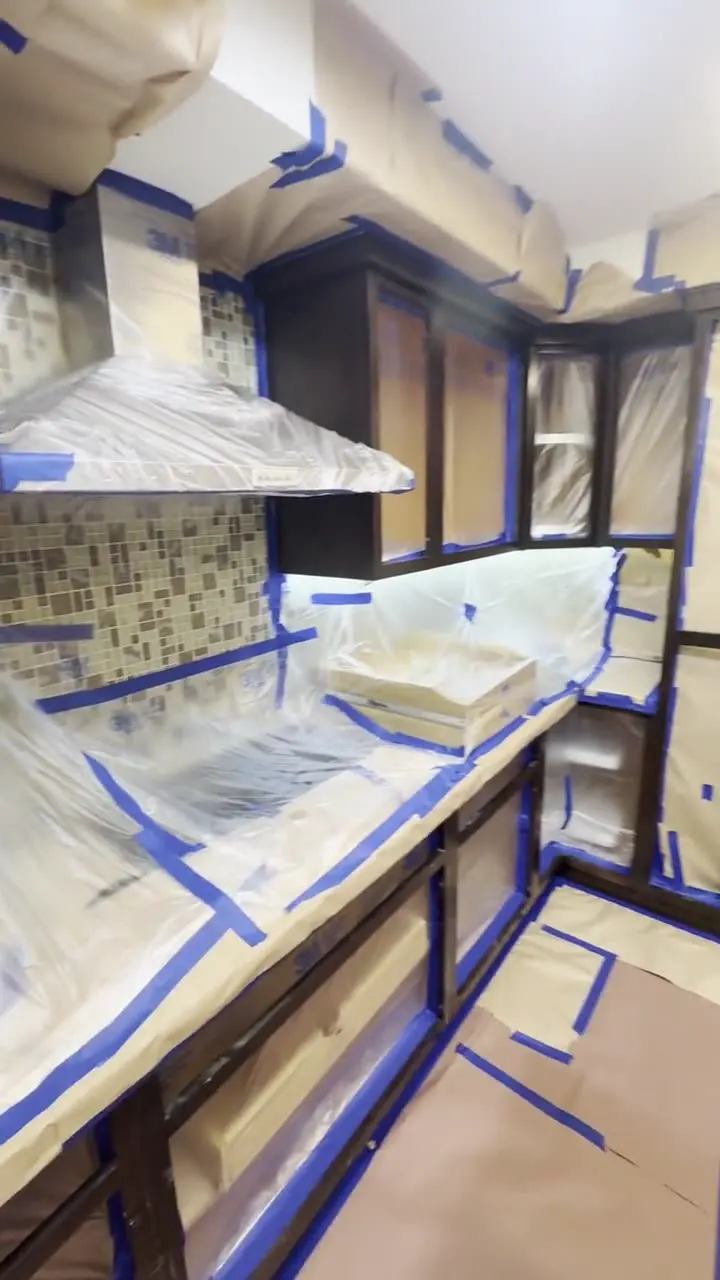
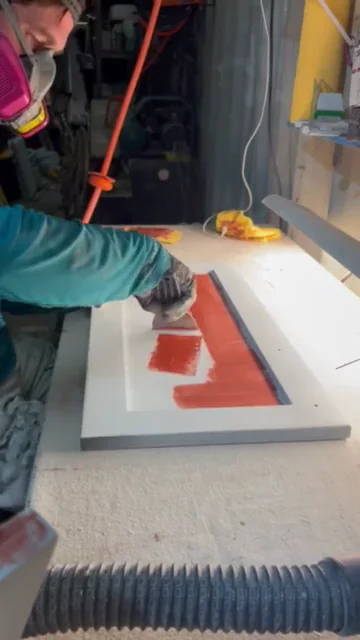
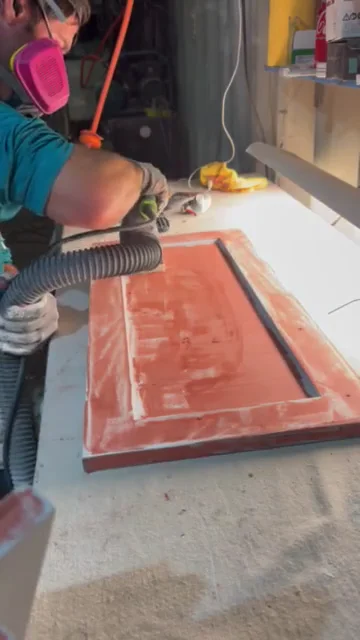
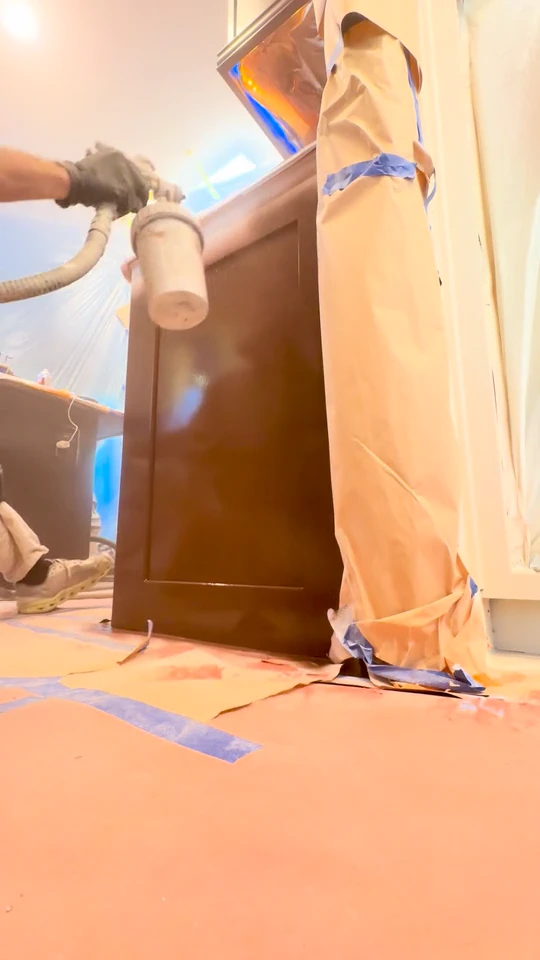
2K polyurethane costs more than one-part cabinet paint. Your quote also covers the preparation, shop finishing and drying time shown here.
Larger kitchens and grain filling take longer; your written quote gives the dates.
Text a few photos of the damage to (951) 551-0583 — Tyler will review the photos and arrange an in-person inspection.
Cabinet refinishing specialist
Sprayed cabinet finishes, done by Tyler.
- CSLB #1015608
- Tyler Fowler handles each project personally
- Two-component (2K) polyurethane
- 5-year written warranty
- Sealed containment and HEPA-vacuumed sanding
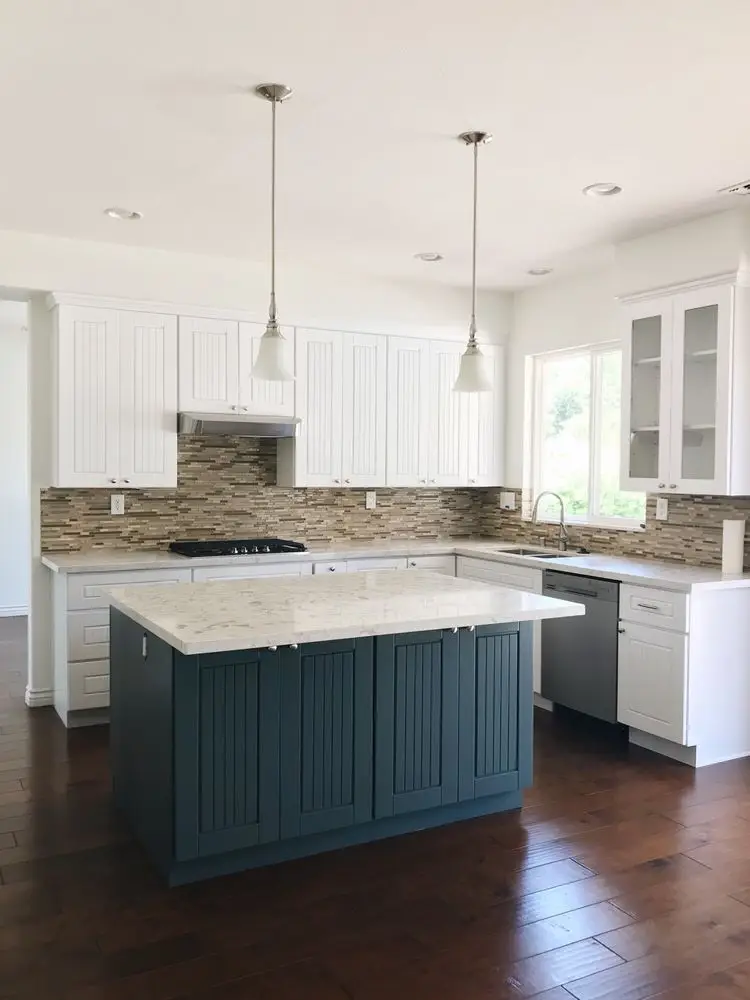
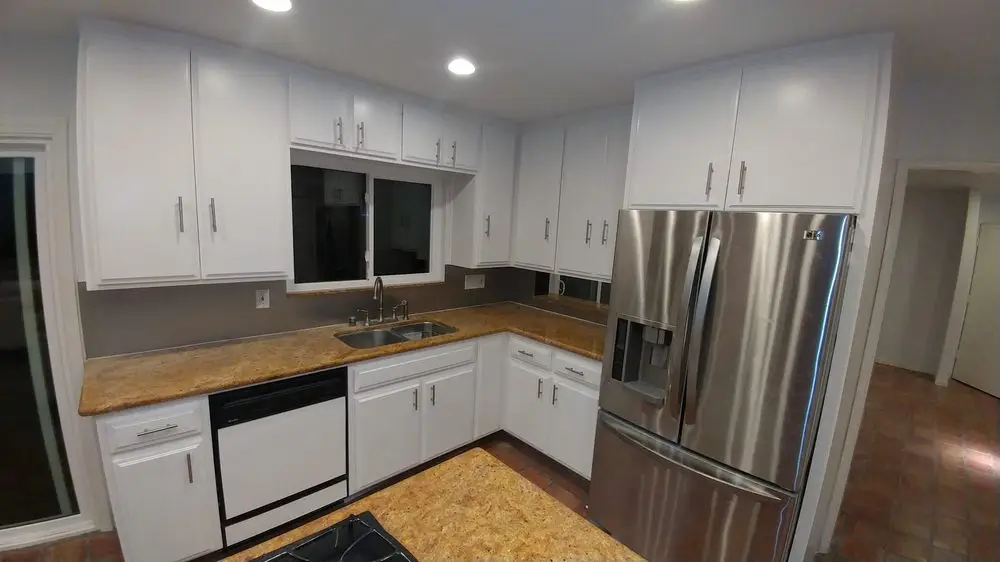
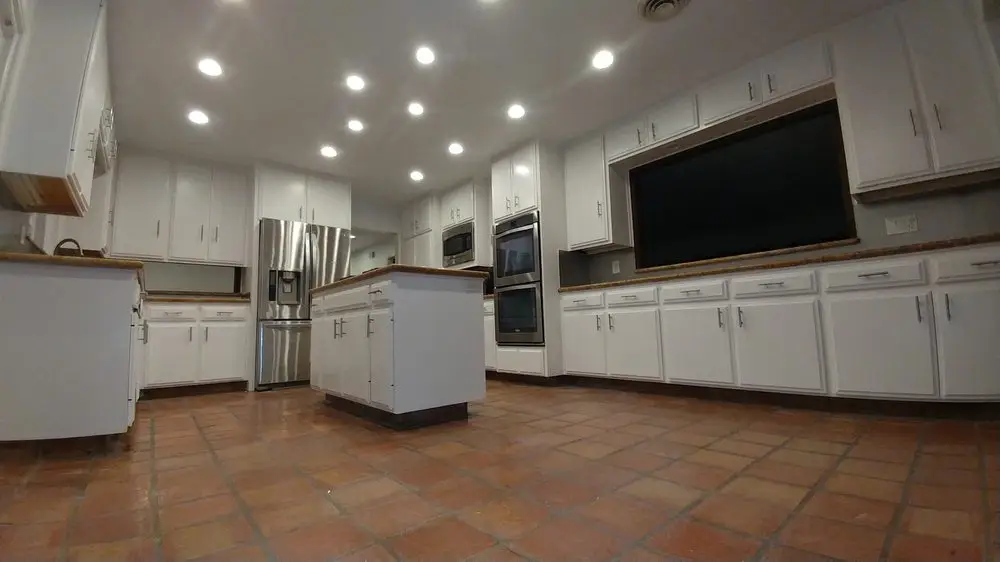
Can it be saved? Recoat, remove, assess or decline
Recoat a sound finish. Start by removing grease and residue. Let the surface dry, scuff-sand the gloss and use primer where the new coating system needs it. Some systems need a separate primer and others don’t on suitable surfaces. The coating’s instructions decide the prep.
Fully remove a failing finish. Paint that peels broadly or stays soft past its cure time comes fully off to sound substrate. A quick scuff over the top won’t make a weak layer stick. Parallel Painting's rescue starts by getting that failed paint out of the way.
Assess a damaged piece. One damaged door doesn’t decide the fate of your whole kitchen. Tyler checks it separately from the boxes and explains whether it can hold a new finish before the refinishing quote.
Know when refinishing won’t work. If your cabinets can’t provide a sound base, Tyler tells you before you commit. Read when cabinet refinishing is not a fit, then talk through your kitchen with him.
What to ask before paying to fix a bad paint job
Get a clear written scope: which paint stays, which paint comes off, and which doors and boxes are included. Ask what primer and topcoat will be used and how the surface will be prepared. A damaged door should be part of that conversation before work starts.
Every full refinish Parallel Painting does carries a 5-year written warranty. Sound paint can be prepared and recoated; failing paint has to come fully off first. Spot touch-ups don’t carry that warranty. Tyler explains the repair and the coverage together, so you know what you’re getting.
How a full cabinet refinish works
A rescue takes the failed finish completely off, down to sound substrate. Before the cabinet boxes are sanded, your kitchen is sealed under negative-pressure containment, and every sander runs on a HEPA vacuum. Priming and surface correction is the longest step of the job. After the first primer coat, every door, drawer front and cabinet surface is skim-glazed with glazing putty, dents, gouges and open seams are spot-puttied, and everything is sanded back smooth. Doors and drawer fronts are checked on inspection tables under bright shop lights, and the cabinet boxes are checked in the kitchen with LED inspection light bars, so dents, sanding marks and uneven spots are found and fixed in primer, before the 2K topcoat goes on. The second primer coat goes on over that corrected surface, so the 2K topcoat lays down on a flat, uniform base. Open-grain oak can also be grain-filled for a glass-smooth door. 2K polyurethane is a two-part coating that hardens through a chemical reaction between its components. A fan draws air through a regular filter and vents outdoors to help control airborne dust, overspray, and fumes within the work area.
Your doors and drawer fronts are sprayed in Parallel Painting's shop booth. Cabinet boxes are sprayed in your kitchen under containment. Tyler Fowler handles each project personally. See how the full cabinet refinishing process works, or read why Parallel Painting uses 2K polyurethane.
What the warranty covers here
Every full refinish Parallel Painting does comes with a 5-year written warranty. For a failing finish, Parallel Painting assesses the existing coating and removes failing paint to a sound substrate before refinishing. Spot touch-ups are sometimes possible, but they don’t carry the 5-year warranty. Tyler explains which repair your cabinets need before you commit.
Cabinet refinishing in Temecula Valley and beyond
Parallel Painting provides premium cabinet refinishing for homeowners in Southwest Riverside County (Temecula, Murrieta, Menifee, Wildomar and Lake Elsinore), nearby Fallbrook and the Coachella Valley. Call or text Tyler to talk through your cabinets and the next step.
Frequently asked questions
Can you repaint cabinets that have already been painted?
Yes, if the existing paint is firmly bonded and properly prepared. Your cabinets need cleaning, scuff-sanding and primer where the coating system requires it. If the old paint is failing, Parallel Painting takes it fully off to sound substrate before rebuilding the finish.
How do you fix a bad cabinet paint job?
Remove failing paint to sound substrate, then rebuild with the right prep, primer and topcoat. If your paint is sound and you just want a different color or smoother appearance, a properly prepared recoat is an option. Tyler looks at your doors himself and tells you which fix they need.
Does every painted cabinet need to be stripped?
No, sound, well-bonded paint can stay after cleaning and scuff-sanding. A failing finish has to come fully off. One impact chip doesn’t mean every door needs stripping. Tyler checks the whole kitchen and explains what stays and what goes.